Most recovery advice comes down to the same tired list: stretch, sleep, drink water, and wait. That advice isn't wrong, but it's also not doing much for the legs that feel like cement the morning after a long run, a loaded squat session, or eight hours on a concrete floor. Air compression recovery boots fill a specific gap that rest alone can't close, and if you've been curious whether they're actually worth the counter space, this is the rundown.
The FIT KING Leg Massager is the pick I keep coming back to for at-home compression recovery. It has 4.3 stars across 20,000+ reviews, fits legs from average to larger builds, and lands well under the price of anything you'd find in a physio clinic. These 10 reasons are why compression boots in general earn a place in any serious recovery toolkit, and why the FIT KING specifically holds up as the practical choice.
Your legs do the work. Give them something that actually helps them recover.
The FIT KING air compression massager covers the full leg from foot to upper thigh with adjustable pressure and six massage modes. Over 20,000 buyers, 4.3 stars.
Amazon Check Today's Price on Amazon →Compression Moves Fluid That Rest Can't Shift
After a hard session your legs pool metabolic byproducts in the tissue. Elevating your feet helps gravity pull some of it back up, but passive rest doesn't apply the repeated squeezing pressure that moves lymphatic fluid efficiently. Air compression cycles inflation and deflation in a peristaltic wave that mimics what muscles do during active movement, which is why it works when you genuinely can't or don't want to keep moving.
You Can Use It While Doing Everything Else
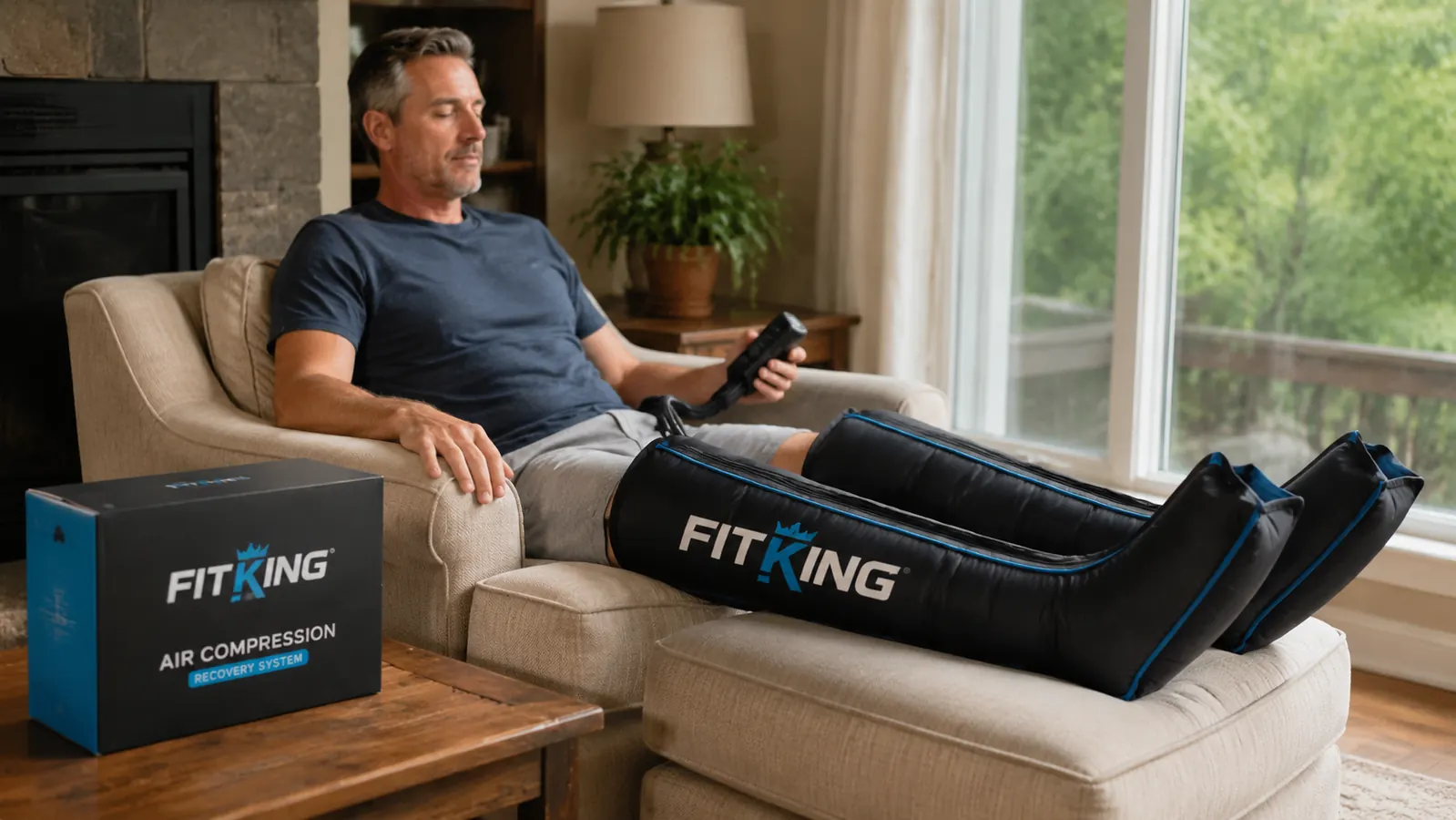
A massage gun requires you to hold it and focus on one spot. Compression boots let you read, watch something, or answer messages while both legs get worked simultaneously. Thirty minutes of passive recovery stacks well on top of whatever else you'd be doing during downtime. For anyone who struggles to carve out dedicated recovery time, this matters a lot.
Coverage That Beats Foam Rolling for Calves and Shins
Rolling your own calves is either ineffective or uncomfortable, depending on how tight they are. Compression boots surround the entire lower leg with even, adjustable pressure across chambers rather than point pressure on a cylinder. For runners and cyclists whose calves take the most abuse, this symmetrical coverage is something a roller or massage gun can't replicate.
Adjustable Pressure Means It Works for Different Bodies and Soreness Levels
A rigid recovery protocol doesn't account for the fact that your legs feel different on Monday than Friday. The FIT KING has six adjustable pressure levels and multiple modes so you can dial it up when you're working with acute post-workout soreness or bring it down for maintenance sessions and travel days when your legs just feel heavy and sluggish.
Foot Coverage Addresses Something Most Recovery Tools Ignore
Plantar soreness and foot fatigue are real problems for runners, people who stand all day, and anyone logging serious mileage on hard surfaces. Most recovery tools stop at the ankle. Compression boots that extend down through the foot can address that specific fatigue in a way that foam rolling, massage guns, and static compression socks simply don't reach.
It's Repeatable Without Wearing Out Your Hands or Your Patience
Self-massage with a gun or ball takes effort and attention. You'll skip it when you're tired, which is precisely when you need it most. Compression boots require zero physical effort once you've zipped in. You can do a full 30-minute session every single day without it feeling like another item on the recovery to-do list, which means you'll actually stick to it.
Works as Well for Non-Athletic Leg Fatigue as It Does for Post-Workout Soreness
Compression boots aren't only for runners. If you're on your feet for long shifts, travel frequently, or sit at a desk all day with pooling and tightness in your lower legs by evening, the recovery benefit is identical. The mechanism doesn't care whether the fluid buildup came from a 10-mile run or eight hours of standing in one spot. For a detailed walkthrough of timing and technique, see our guide on how to speed up leg recovery after long runs where the same protocol applies to recovery from any lower-body fatigue.
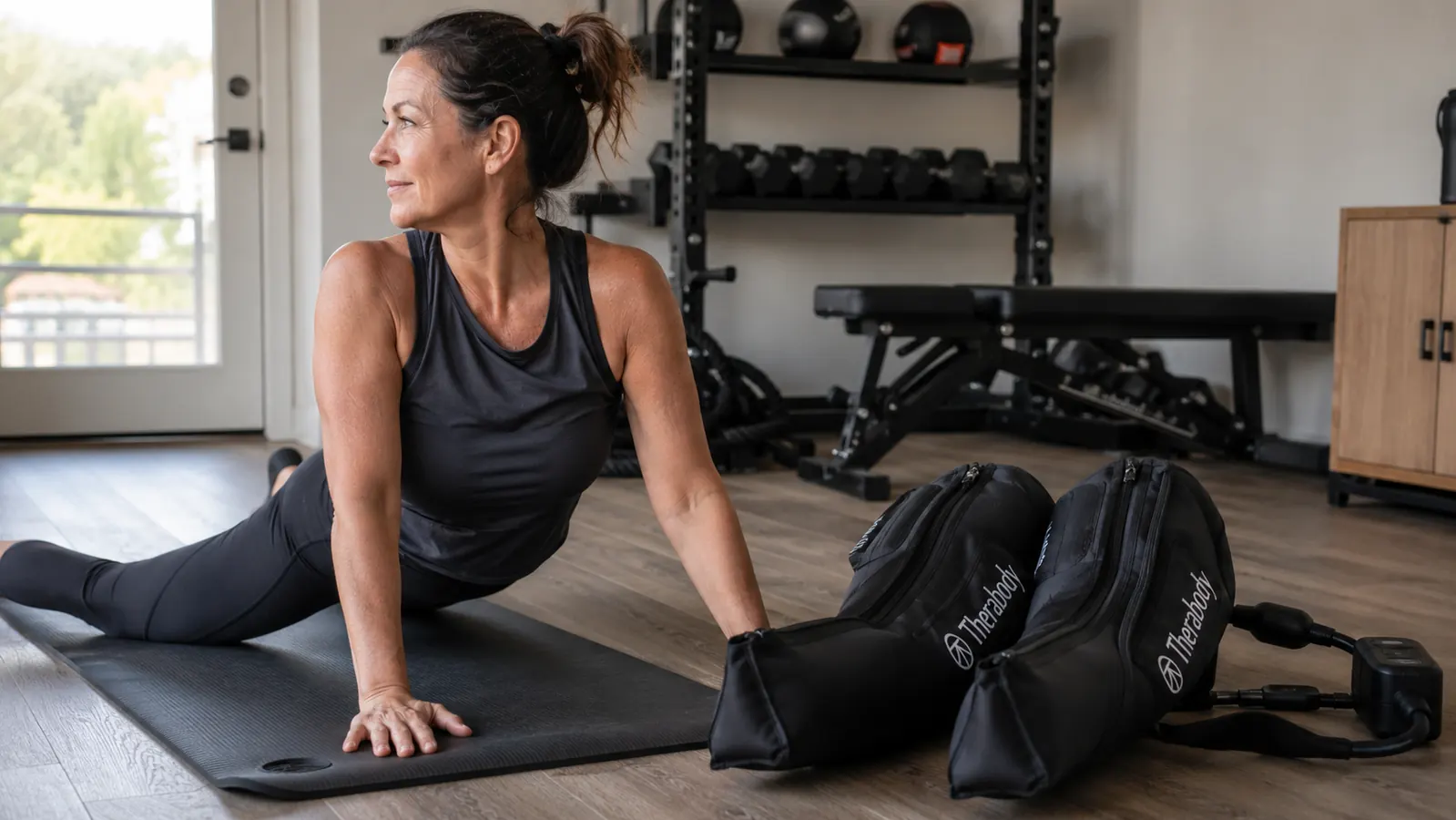
The Price-to-Performance Gap vs. Clinic-Grade Equipment Has Closed
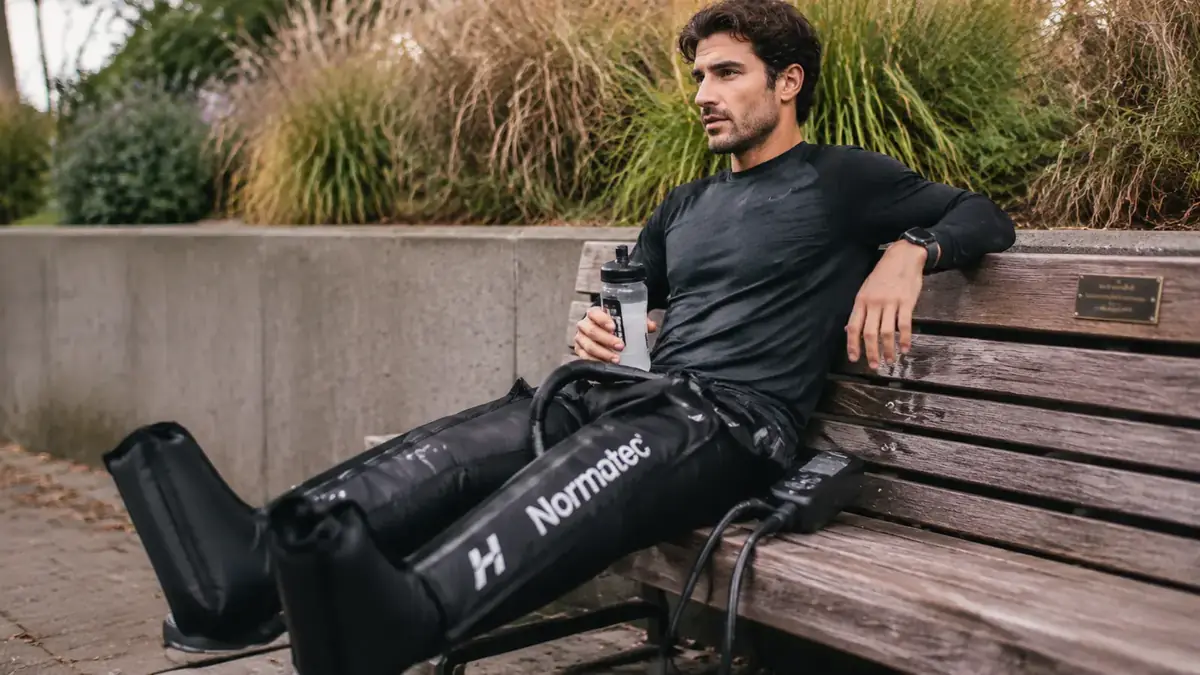
Professional sports teams use NormaTec and similar clinic-grade systems at professional pricing. The underlying compression therapy mechanism is the same. At-home consumer boots like the FIT KING apply the same air chamber inflation wave at a fraction of the price. The difference is build quality, customization depth, and how the unit handles edge cases. For most people doing three to five training sessions per week at home, the FIT KING covers what they need without the clinic price.
Consistent Use Reduces the Next-Day Soreness Ceiling Over Time
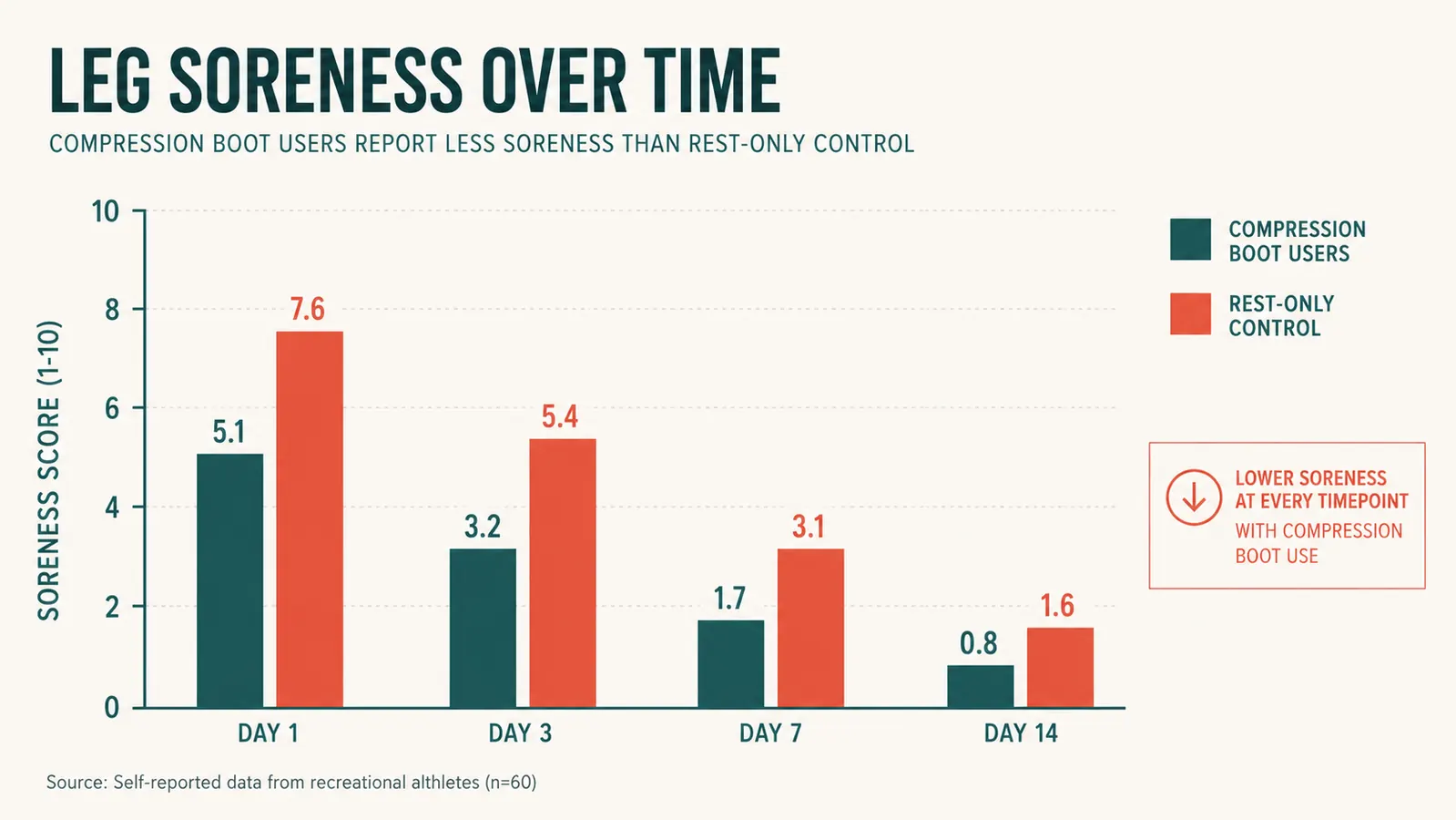
Using compression boots once after a particularly brutal workout is better than nothing. Using them consistently after every hard session compounds the benefit. Regular compression sessions appear to reduce baseline inflammation and keep the legs feeling fresher going into subsequent training days, which means less protective soreness and shorter recovery windows over weeks of consistent use. That second-day-soreness ceiling gets lower the more consistently you work it.
It Actually Gets Used, Which Beats Every Recovery Tool You Bought and Shelved
The recovery tool that works is the one you'll actually use. Compression boots require no setup beyond sitting down and zipping in. There's no activation, no warm-up, no correct form to remember. The low friction means you'll use it on easy days, travel days, and days when your legs feel fine and you just want to stay ahead of soreness. A tool that gets used five times a week beats a better tool that gets used twice a month.
What I'd Skip
Compression boots are not the move for acute injuries where swelling is still active and hot to the touch. They're a recovery and maintenance tool, not a treatment for new injuries. If something specific happened to your leg and it's visibly swollen with heat, that's a conversation for a medical professional, not a compression session. Similarly, if you're looking for deep-tissue knot work on a specific muscle belly, a massage gun or targeted roller will get there faster. Compression boots excel at systemic leg recovery, not pinpoint treatment.
The recovery tool that actually works is the one you'll use every time, not the one that requires setting an intention and warming up your hands first.
Ten reasons is a lot. The short version: it works, it's passive, and you'll actually use it.
The FIT KING air compression leg and foot massager covers full-leg coverage with six modes and adjustable pressure. Over 20,000 ratings at 4.3 stars. Worth a look if compressed recovery is missing from your routine.
Amazon Check Today's Price on Amazon →