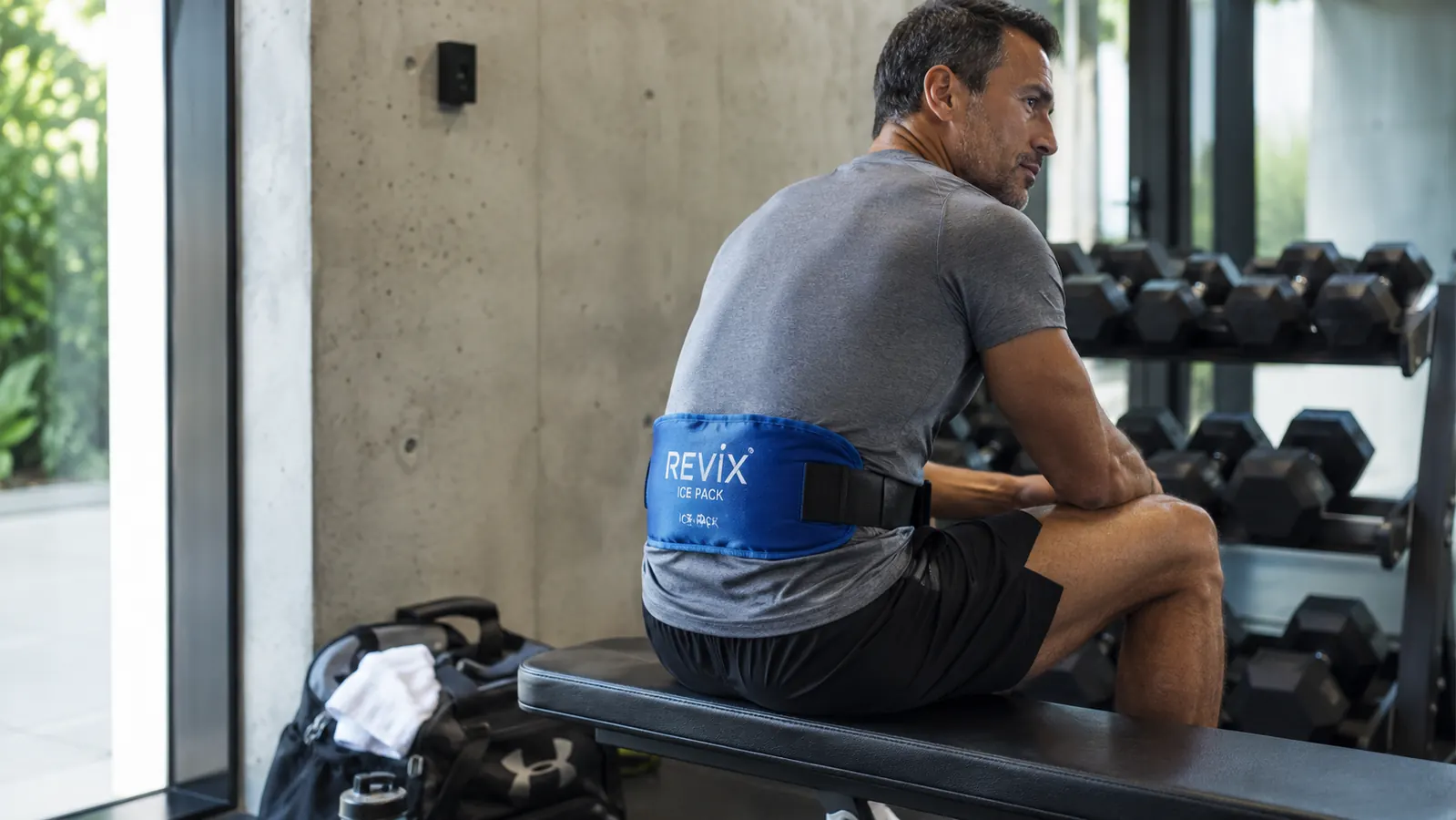
My lower back has been an ongoing project for about four years. Not the dramatic kind that puts you flat on the floor, just the persistent kind: a dull tightness after long training sessions, a nagging soreness that shows up uninvited after a few hours of standing. I deadlift twice a week, run three or four times, and spend more time at a standing desk than I should. The back responds to all of it. Cold therapy is part of how I manage the aftermath, and after going through a half-dozen options, the REVIX reusable gel ice pack is what I have been using for the last eight months. I want to tell you exactly what I found.
Before the REVIX, I tried disposable instant-cold packs (weak, wasteful, one-and-done), a thin generic gel wrap from a drugstore (split at the seam after six weeks), and a larger hybrid pad that technically worked but was so stiff when frozen you could not get it to conform to anything. The REVIX costs less than most of those alternatives over a season of use, and it has held up better than any of them. That is the short version. Here is the long one.
The Quick Verdict
A well-built, flexible gel ice pack that stays cold long enough to matter and actually conforms to curved body parts. The strap system is better than average, though coverage is limited for wide lower-back use. Excellent value for the price.
Amazon Check Today's Price →Your back is still sore and you know it. Check what the REVIX runs right now.
Over 8,900 reviews, 4.6 stars, and a price that makes it easy to keep one in the gym bag and one in the freezer. See today's price before it moves.
Amazon Check Today's Price on Amazon →How I've Used It
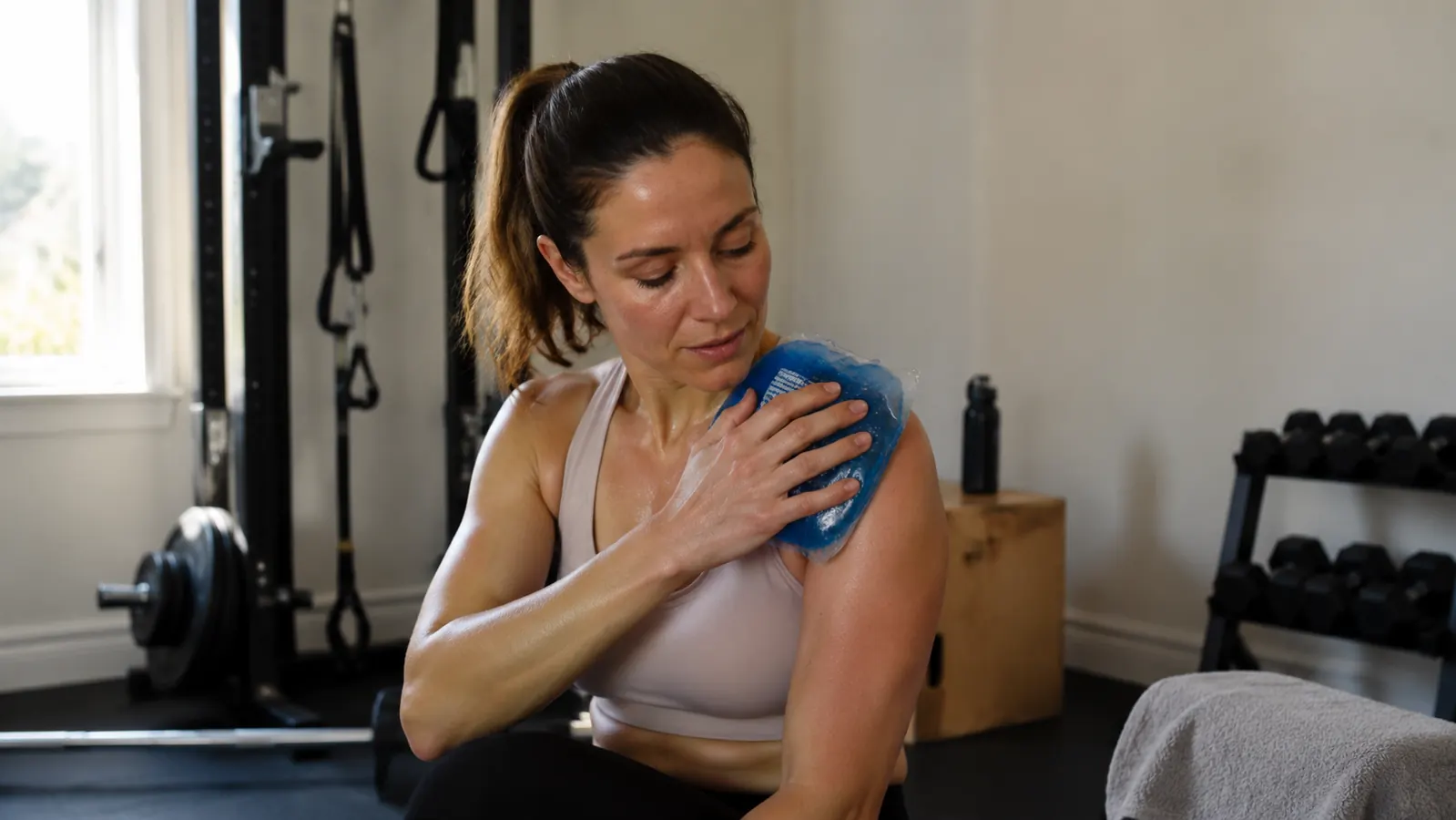
I have been using this pack consistently since last October, so I have run it through cold weather months and into summer. My standard protocol is 15 to 20 minutes applied to the lower back within 30 minutes of finishing a heavy training session. Some weeks that is three times, some weeks five. I have also used it on my right elbow after a period of tendon irritation from too much pulling volume, and on my left shoulder after an overhead pressing block that got a little ambitious. Total sessions are somewhere between 150 and 175 at this point.
Freeze time from room temperature is about two hours. If you pull it from the freezer after a full overnight freeze, it comes out firm in the center but still pliable enough around the edges to shape around your body. That balance matters more than it sounds. A pack that freezes completely solid is nearly useless on a curved surface like a lower back or knee.
I always use it over a thin layer of fabric, either a t-shirt or a light wrap. Direct skin contact is colder than necessary and you lose some of the conforming benefit anyway. Over a shirt, the REVIX stays noticeably cold for about 20 to 25 minutes, which covers the standard icing window without needing to refreeze mid-session.
Gel Consistency: Where This Pack Earns Its Reputation
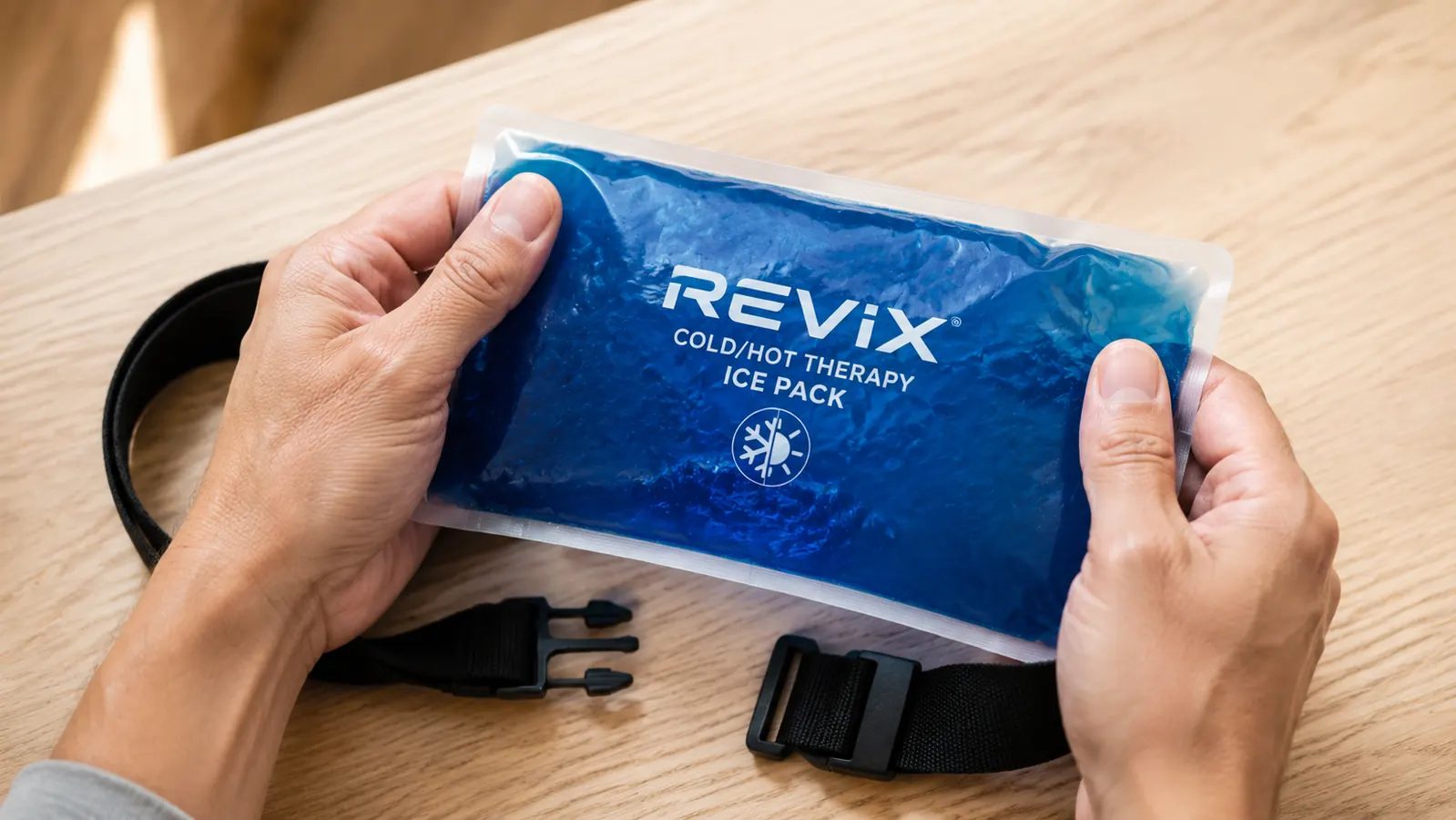
The gel inside the REVIX is noticeably thicker than what you find in most grocery-store or pharmacy-brand packs. When you press it against a rounded surface, it distributes and conforms rather than staying flat and bridging the gap. On my lower back specifically, where the lumbar curve creates a natural arch, cheaper packs sit flat and only contact the bony protrusions. The REVIX actually conforms into that curve, which means more surface area making contact and more effective cold transfer.
After 150-plus freeze-thaw cycles, the gel consistency has not noticeably changed. I was genuinely curious whether it would get lumpy or whether the gel would migrate toward one end of the pack, which is something I have seen happen with cheaper options. It has not. The distribution is as even now as it was on the first use. The outer shell has stayed intact with no leaks or separation at the seams.
After 150-plus freeze-thaw cycles, the gel is as even and consistent as it was on day one. That alone sets it apart from every cheaper option I have tried.
The Strap System: Better Than Average, Not Perfect
The REVIX comes with an elastic wrap strap that secures around the pack and around whatever body part you are applying it to. It is adjustable and uses a basic clip closure. For wrapping around my lower back, the strap is long enough to stay secured without me lying on the pack or holding it in place. For the elbow and shoulder, it works well. The strap holds through a 20-minute session without slipping.
Where the strap system has limits: the clip feels like the weakest component. After several months of use, mine has not broken, but it does show more wear than the pack itself. It also takes a moment to figure out the right tension on the first few uses. Too loose and the pack shifts. Too tight and you cut off comfortable circulation. Once you dial in the tension for each body part, it becomes muscle memory. But there is a learning curve.
For the knee specifically, I found the strap less useful than I expected. The knee is a difficult geometry to wrap securely, and the REVIX strap kept sliding toward the mid-calf during sessions. I ended up just draping the pack over the knee and resting with my leg elevated instead of relying on the strap for that application. That is not a dealbreaker, but it is worth knowing.
Coverage and Size: Good For Most Uses, Not All
The REVIX pack I use is the standard size, which covers a roughly 11 by 14 inch area when laid flat. For targeted use on the lower back, a shoulder, or an elbow, it is plenty. If you are hoping to ice the full width of your lower back from hip to hip in a single placement, you may find yourself repositioning once or twice per session. My lower back is about average width and the pack covers roughly two-thirds of it in a single placement.
REVIX makes a larger version if you want more coverage. I have not tested that one, so I cannot speak to it directly. For the areas I use it most, including a focused lumbar zone, the shoulder, and the elbow, the standard size is appropriate. It is also light enough to actually carry in a gym bag without adding meaningful weight.
Cold Retention Over Time
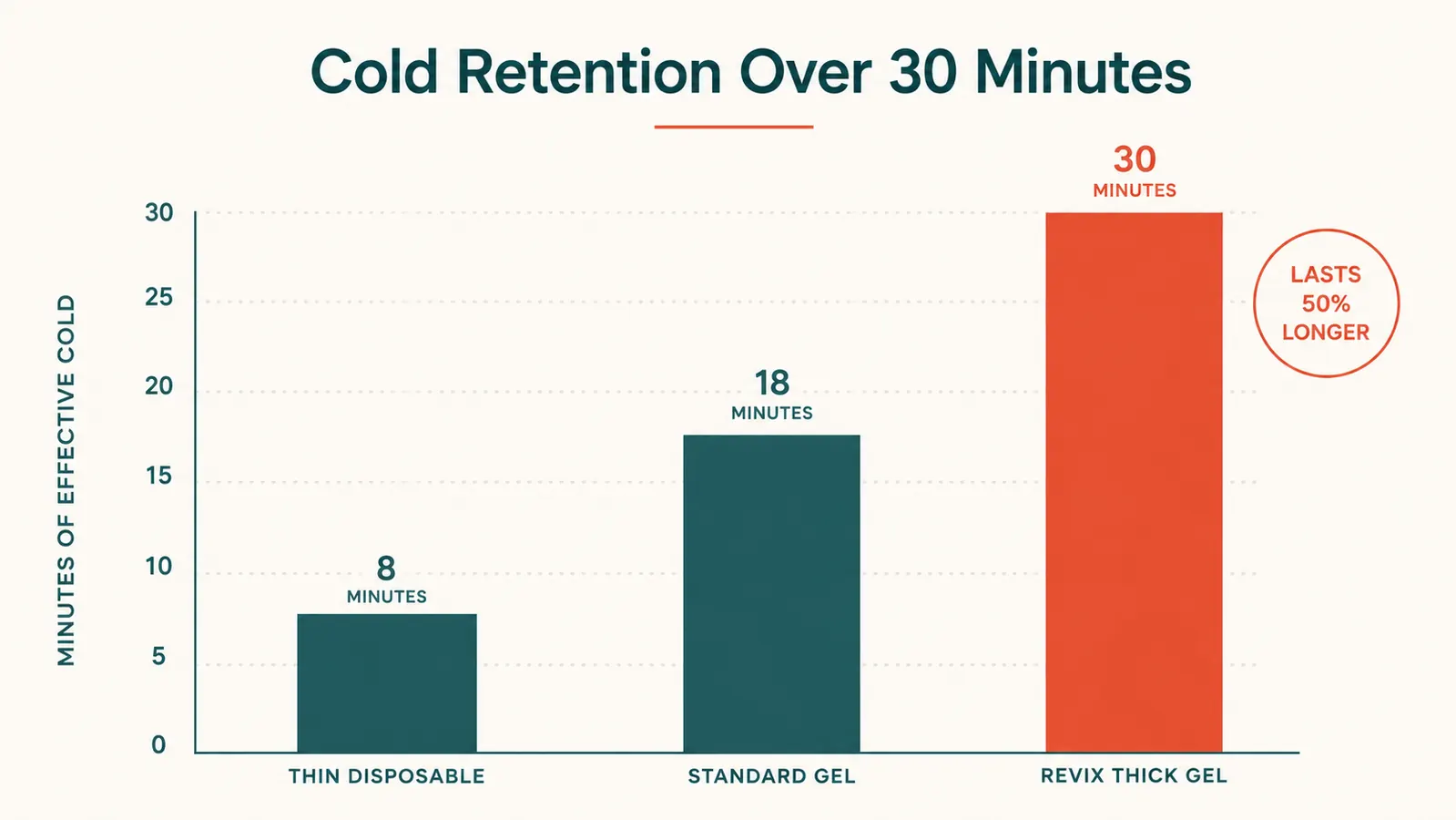
The thicker gel means the REVIX holds cold longer than thin alternatives. From a full overnight freeze, I get 25 to 30 minutes of effective cold before it starts warming to the point where I can feel the difference. For comparison, the thin drugstore wrap I used previously maxed out at about 12 to 15 minutes. If your icing sessions are under 20 minutes, the REVIX will stay cold throughout without needing any special insulation tricks.
Refreezing takes about an hour and a half to two hours from fully thawed. I keep two in rotation during heavy training weeks so one is always ready. That is the simple workaround for anyone who ices multiple times a day.
What I Liked
- Gel conforms to curved body parts (lumbar, shoulder, elbow) better than flat packs
- 25 to 30 minutes of effective cold from a full overnight freeze
- Gel consistency and pack integrity unchanged after 150-plus freeze-thaw cycles
- Lightweight enough to keep in a gym bag
- Strap system holds well for back and upper body applications
- 4.6-star rating across nearly 9,000 reviews suggests consistent quality control
Where It Falls Short
- Strap clip shows wear faster than the pack itself
- Coverage can feel narrow for wide lower-back applications
- Knee strap application is awkward, pack slides without elevation
- Two-hour refreeze time means rotating two packs during heavy training weeks
How It Compares to What I Used Before
The two main alternatives I have direct experience with are thin gel packs (the kind you find at any drugstore for a few dollars) and a hybrid heat-and-cold pad that was larger but stiffer. The thin gel packs are serviceable in a pinch but they freeze hard, flatten against the skin without conforming, and in my experience, they start leaking within a few months of regular use. The hybrid pad covered more surface area but was so rigid when frozen that it functionally only contacted the high points of the back, which defeats the purpose.
The REVIX lands in a useful middle ground. It is not a medical-grade cold therapy device. It is a well-constructed consumer gel pack that does what a gel pack should do, holds together over time, and does not cost much. For active adults who ice regularly as part of a standard recovery routine, it is a better daily driver than the alternatives at or near its price.
I have not personally compared it to TheraPearl, which is a common alternative with a different gel bead design. That comparison lives in a separate article if you want a direct head-to-head. The short version from other users I have talked to: REVIX tends to edge out TheraPearl on cold retention; TheraPearl tends to feel more pliable right out of the freezer. Both are solid options in this category.
Who This Is For
The REVIX is a strong fit if you are an active adult who ices specific areas regularly as part of a structured recovery routine. You train consistently, you take post-workout recovery seriously, and you have figured out that a good ice pack that actually stays in place is worth spending more than three dollars on. The back, shoulder, and elbow applications are where it performs best. If you are recovering from a procedure or need clinical-grade cold delivery, this is not that, and you already know it. For regular training recovery use, it earns its spot.
Who Should Skip It
If your primary application is the knee, especially if you need the pack to stay secured during movement or with the leg bent, the strap system will frustrate you. You are better off with a pack that has a sleeve designed specifically for the knee joint. Similarly, if you need to cover the full width of a broad lower back (think a larger build or someone whose soreness spreads across both sides hip-to-hip), you will find yourself repositioning more than you want. The larger REVIX size may address that, but I have not tested it myself and cannot confirm. Also skip this if you ice only once or twice per season after occasional soreness. Any gel pack will work fine at that frequency. The REVIX earns its value through durability under regular, repeated use.
Eight months in, it is still the first thing I grab. Here is today's price.
The REVIX is budget-friendly and has held up to over 150 freeze-thaw cycles without any gel migration, leaks, or seam failures. If you ice regularly, the cost-per-session math works out fast. Check the current price on Amazon.
Amazon Check Today's Price on Amazon →