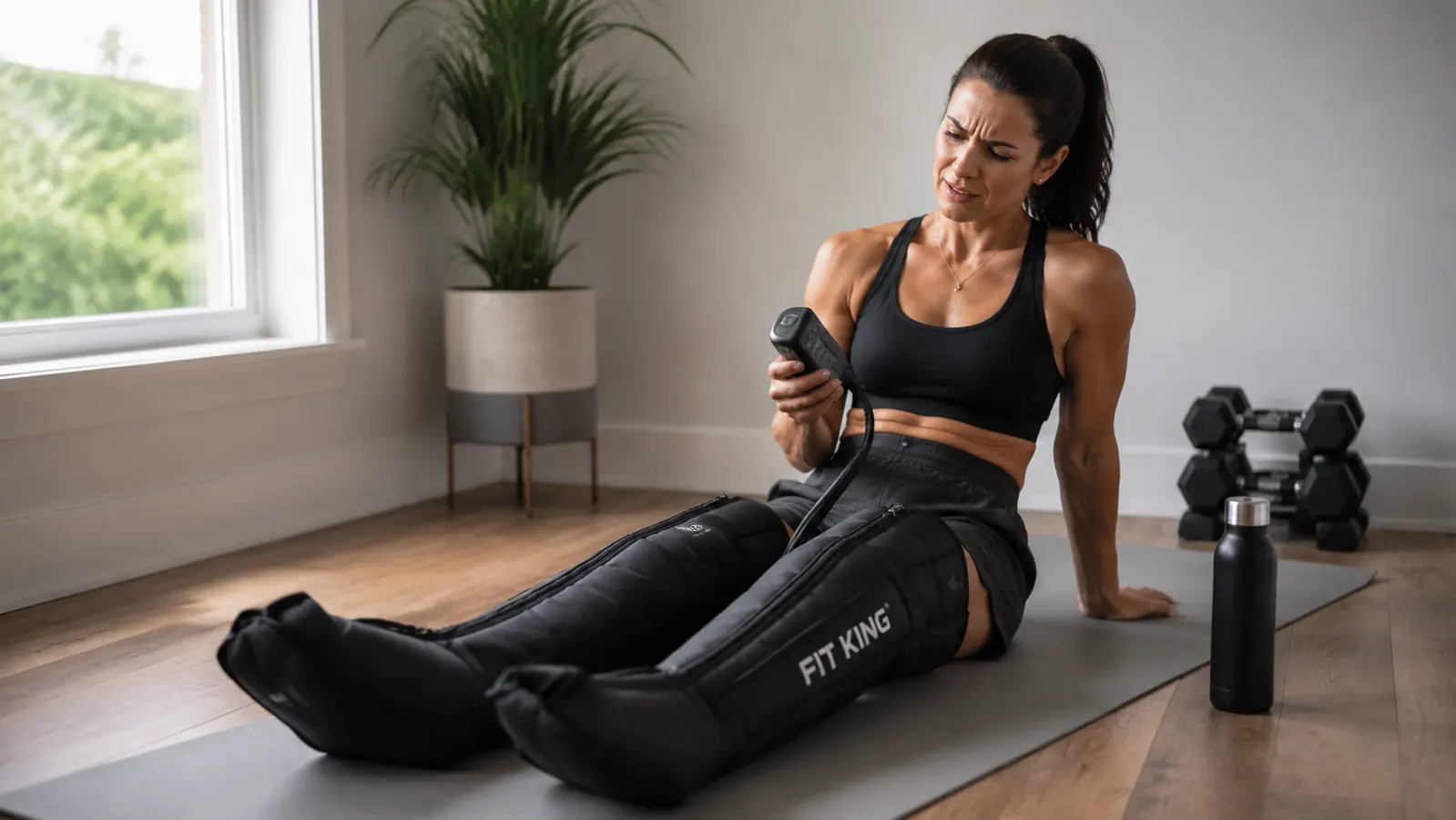
I bought the FIT KING leg massager three months ago after a half-marathon training cycle left my calves and feet wrecked for four to five days after every long effort. I am 38, female, 5 foot 4, and I stand on hard floors for eight hours a day at my job before I ever get to a training run. The reviews looked good, the price was reasonable, and I ordered it. What followed was a two-week learning curve nobody mentioned in any review I read. This is the piece I wish had existed before I unboxed it.
The FIT KING air compression massager has over 20,000 Amazon ratings at 4.3 stars, which is genuinely impressive. But high-volume reviews often flatten the experience into a thumbs up or thumbs down. The real texture of owning this thing, the fit considerations, the session heat, the controller behavior, what intensities actually do what, lives in the details. Here are 14 of them.
The Quick Verdict
A strong value for anyone who needs consistent lower-leg recovery but does not want to spend top-tier prices on clinical boots. The cuff fit question is real and worth knowing before you order.
Amazon Check Today's Price →Your legs are still wrecked two days post-workout. Here is the specific thing that changed that for me.
The FIT KING air compression leg massager has more than 20,000 verified ratings at 4.3 stars. Check today's price and availability on Amazon before your next training week.
Amazon Check Today's Price on Amazon →How I've Used It (and Why My Test Conditions Matter)
My use profile: three to four sessions per week, always post-workout or post-shift, 20 to 30 minutes per session. I focus on calves and feet, which is the coverage this particular kit covers. I am a smaller-framed woman with narrow calves, which turns out to be the most important variable in this entire review. My calves measure 13 inches at the widest point. I will come back to why that number matters in item two.
I am not a physical therapist and I am not making any health claims here. What I am reporting is what I notice: how my legs feel the day after I use this versus the days I skip it, and the practical realities of integrating it into a recovery routine. That framing is what I want from any review I read, so it is what I am writing.
The 14 Things
1. The setup is faster than you expect
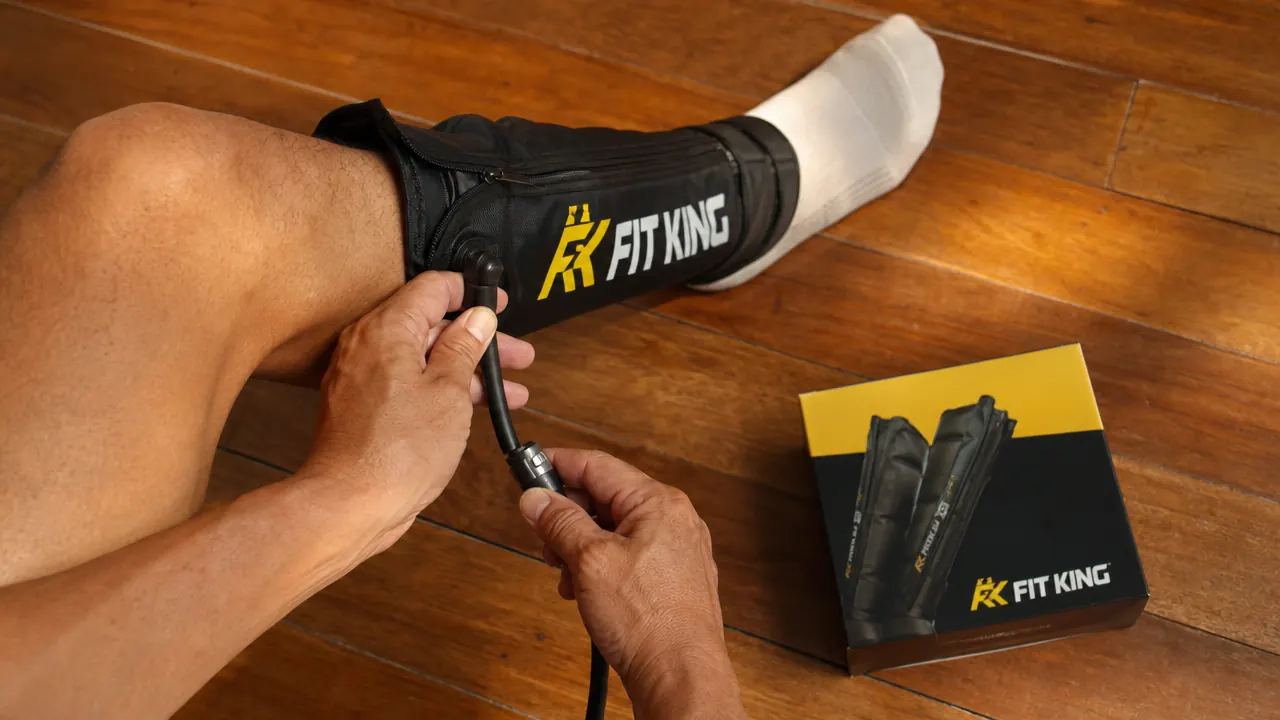
Unboxing to first session took me under five minutes. You pull the sleeves on, wrap the velcro, plug the hoses into the controller ports, and press power. There is no app, no Bluetooth pairing, no account creation, no firmware update. It is a corded device with physical buttons and it starts immediately. If you have been dreading a complicated setup, do not. This is not that.
2. Calf width changes your entire experience
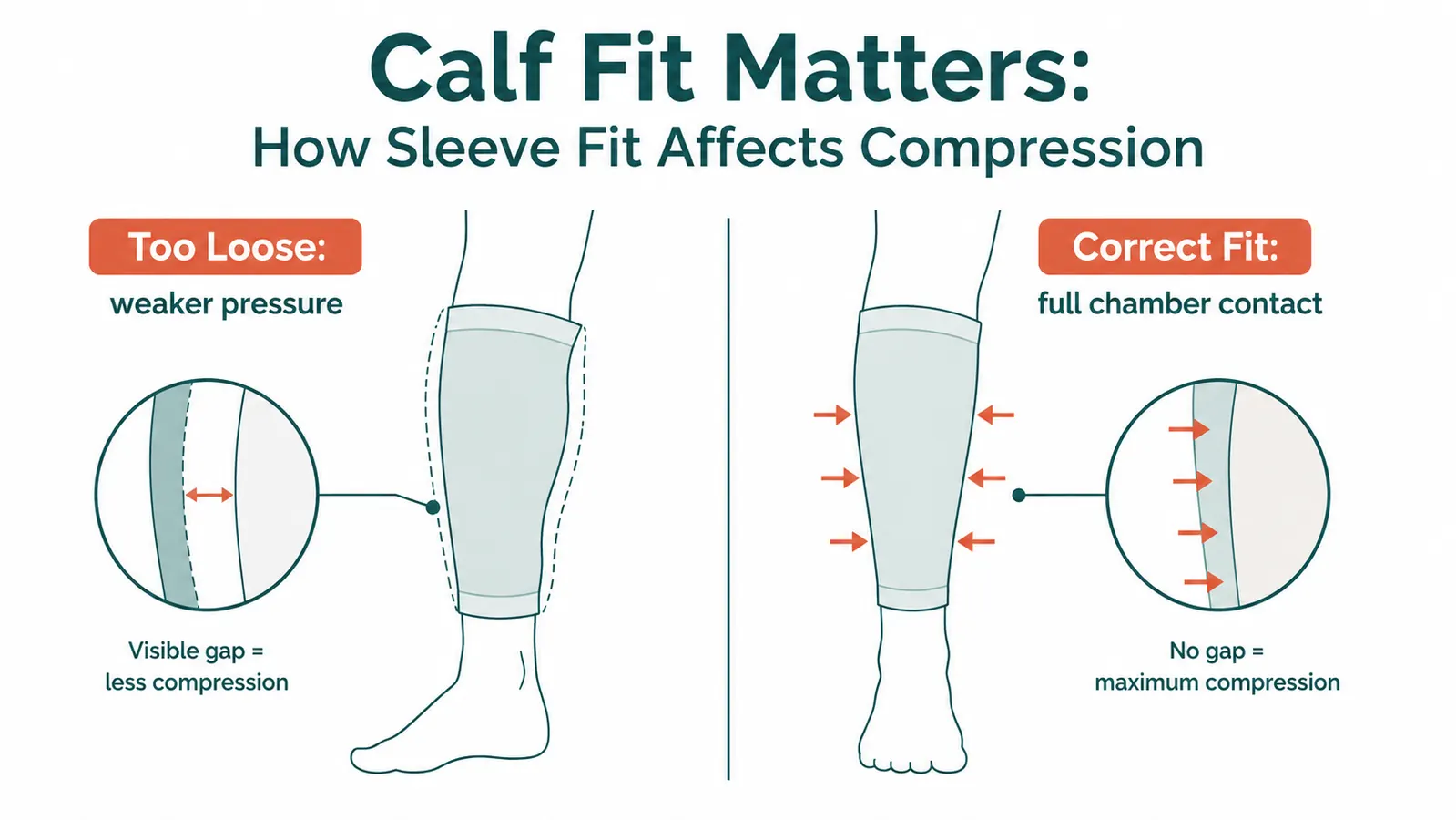
This is the single most important thing I can tell you. The airbag inside each sleeve is sized for a medium-to-large calf. If you measure under about 13.5 inches, the airbag may not make full contact with your leg when inflated, which means the compression pressure is diffused rather than direct. My first two sessions at intensity 3 felt like barely anything. I kept turning it up, wondering if the unit was working. It was. The issue was fit. Wrapping a thin foam pad around my calf before slipping the sleeve on created the snug contact I needed, and the difference was immediate. The product did not tell me this. No review I read mentioned it.
3. The controller has a learning curve, not a tutorial
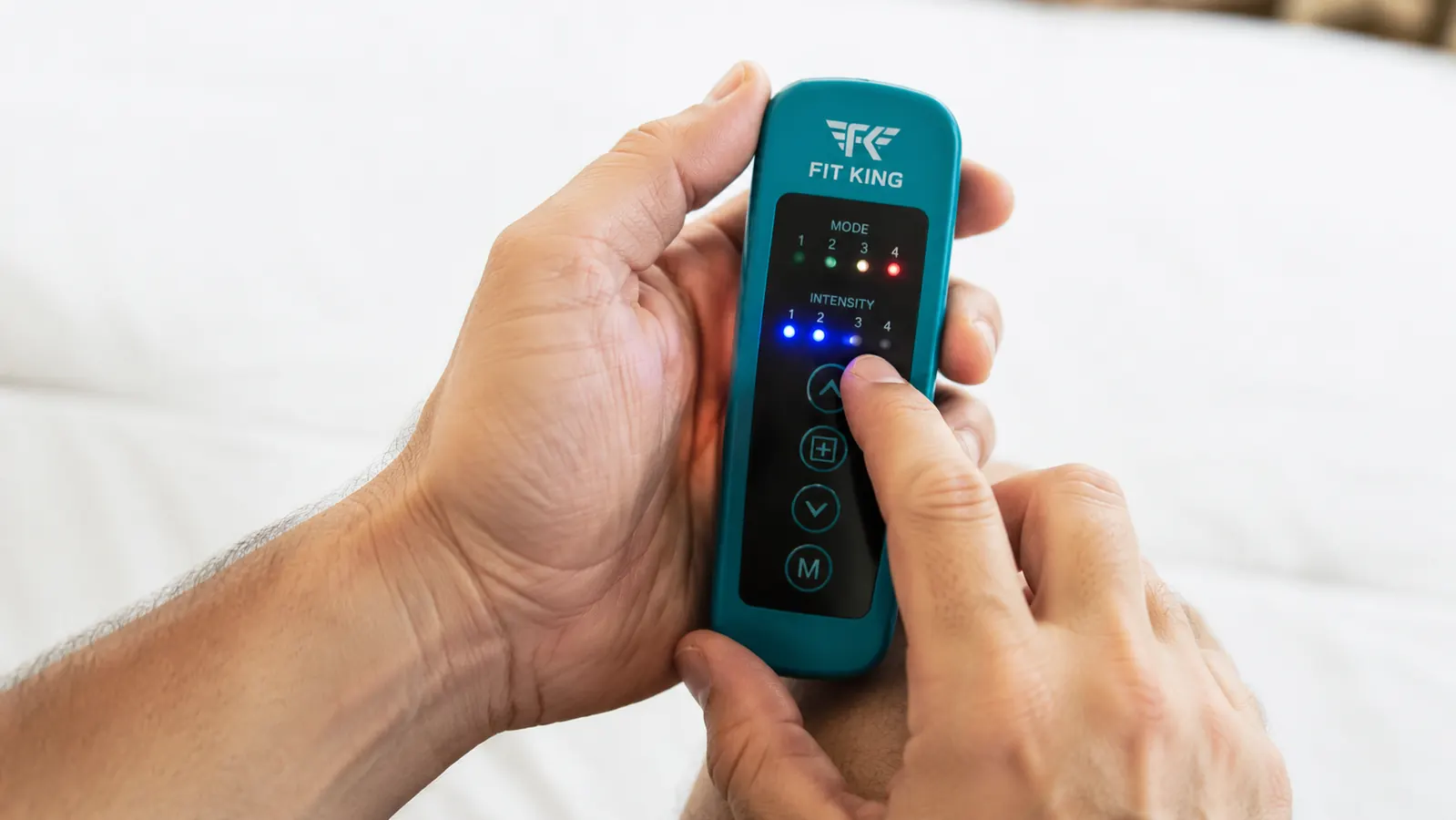
The handheld controller has five buttons: power, intensity up, intensity down, mode switch, and timer. The icons are small and embossed rather than printed. In a dim room at night, you are going by feel. It took me about four sessions to stop accidentally switching modes when I meant to adjust intensity. After that, it became automatic. The learning curve is real but short. Know going in that the first week involves some button hunting.
One thing that helps: the power button has a different texture from the others, so you can orient your thumb by feel. Start there and count over. Within a week you will not need to look at it.
4. There are three modes and most people use one
The FIT KING offers multiple compression modes that cycle the chambers in different sequences. Mode one runs sequential from foot upward. Mode two alternates. Mode three is a faster pulse. I spent the first two weeks cycling through all three. I landed on mode one and have not changed it since. If you are the kind of person who will experiment and dial in the optimal mode for your specific feel, the options are real. If you are not, pick one in week one and move on. You will not be missing out.
5. Intensity 1 and 2 are for warmup, not recovery
The six intensity settings span a wide range. One and two feel genuinely gentle, almost too light to notice if you have tired legs. They are useful for sensitive days or first-time users getting comfortable with the sensation. For active adults who train hard and want real circulation support, most will land between 3 and 5. I use 4 most nights and step down to 3 when my legs are acutely sore from a hard effort. Level 6 exists and it is noticeably firm. I have used it twice. It is not uncomfortable, just a lot.
6. Sessions generate heat, especially at high intensity
Nobody tells you this one. At intensity 4 or higher, after about 12 to 15 minutes, the inside of the sleeves get warm. Not painful, not alarming, just noticeable. The airbags are close-fitting neoprene-style material and the repeated inflation creates friction warmth inside. On hot days or after workouts where I am already running warm, this tips from comfortable to slightly sweaty at the 20-minute mark. My fix: I wear thin ankle socks under the sleeves, which absorbs most of it. A single reviewer mentioned this in passing. It deserves more than that.
7. The foot bladder and the calf bladder feel different
The FIT KING covers both the calf and the foot in one continuous sleeve. The foot section inflates against the arch and heel. The calf section is the main event. What I did not expect: the foot compression is the part I look forward to most. After a long work shift on hard floors, the arch inflation alone is worth the session. If you are primarily buying this for plantar fatigue or end-of-day foot soreness and only secondarily for calves, you will not be disappointed.
8. The hose connectors can feel stiff at first
The air hoses that connect the sleeves to the controller push-connect with a small click. When new, the female ports are tight and require firm pressure to seat the hose. The first time I tried to connect them, I was not sure if they were going in correctly or if I was bending the hose wrong. They were fine. They loosen up slightly after the first 10 or so connections. After a month of use, connecting and disconnecting takes about three seconds per hose with one hand.
The calf fit question is the thing I wish I had known before ordering. If you are on the narrow end of the size range, spend five minutes reading the fit details. It changes whether your first session feels like nothing or actually works.
9. The auto-timer runs a full cycle regardless of intensity
The built-in timer runs a standard session, typically around 20 minutes, and shuts off automatically. This does not change based on your intensity setting. At intensity 6, you get the same duration as intensity 2. If you want a shorter or longer session, you either power it off manually or turn it back on for another cycle. For my use, the auto-cycle length is correct and I let it run to completion every time.
10. It works with pants on
A small but genuinely useful detail. The sleeves are large enough to fit over thin athletic pants or compression tights. I do not have to change into shorts to use this. After a long day, that removes a small friction point that would otherwise make me skip sessions. Thick denim or heavy fabric does not work, but anything athletic fits under the sleeve without affecting compression noticeably.
11. The pump sound is steady and rhythmic, not loud
The compressor that runs inside the controller unit makes a sound. It is not a white noise machine, but it is not disruptive either. The best description: like a small aquarium pump running in the next room. At normal TV volume, you cannot hear it over the audio. In a quiet bedroom late at night, you can. It cycles with each inflation, roughly every 8 to 12 seconds at standard intensity. If you share a bedroom with someone who is a light sleeper, a 10pm session might be worth moving to a different room. This is not a noise complaint, just a real-world consideration.
12. Storage matters more than you think it will
The kit comes with a carrying pouch. It fits everything: controller, both sleeves, and both hoses. When packed, it is about the size of a small laptop bag. I keep mine on a shelf near the couch rather than in a closet, because the few seconds it takes to retrieve it from a shelf is the difference between using it and skipping it. Recovery tools that live in closets get skipped. This one earns its real estate on the shelf.
13. It does not cover the thigh or knee
The standard FIT KING kit I am reviewing is calf-and-foot only. The sleeve ends just below the knee. If your primary soreness is in your quads, hamstrings, or IT band, this will not address it. FIT KING makes an upgraded model with thigh extensions. If you are a cyclist with a quad-dominant recovery need or a runner whose biggest issue is above-the-knee, the standard kit is not your best option. Know that before ordering.
14. The velcro holds well, but the angle matters
The sleeves close with velcro wraps. Wrap it on too loosely and the airbag shifts during inflation. Wrap it too tightly and you feel constricted before the compression even starts. The right tension is snug but not tight, roughly the same feel as a well-fitted compression sock. After about a week, I learned exactly where to set the wrap and the sessions improved noticeably. There is a small skill curve here that nobody discusses. Once you have it, it is automatic.
What I Liked
- Calf-and-foot coverage in one sleeve gives plantar and calf relief in the same session
- Three-mode, six-intensity setup gives real flexibility once you learn the controller
- Auto-cycle timer means zero management once the session starts
- Thin enough to fit over athletic pants, removing friction from daily use
- Carrying pouch keeps everything together and makes shelf storage practical
- Price point is a fraction of clinical compression boot alternatives with a similar compression mechanism
Where It Falls Short
- Sleeve sizing favors medium-to-large calves; narrow-legged users need a fit workaround to get full compression
- Controller buttons are small and icon-only; expect a four to five session learning curve in the dark
- Heat builds inside sleeves at intensity 4 or higher after 12 to 15 minutes; noticeable on warm days
- No thigh or knee coverage on the standard kit; a separate model is required for upper-leg recovery
- Pump sound is audible in quiet rooms and may disturb light sleepers in a shared bedroom
Who This Is For
The FIT KING is a strong buy for anyone whose primary soreness and fatigue lives below the knee. Runners dealing with calf tightness and plantar fatigue, people who stand on hard floors all day, hikers who come home with swollen feet, cyclists with end-of-day lower leg heaviness. The compression mechanism is identical to what physical therapists and sports clinics use, just packaged for home use at a much lower price. If you are on the fence between this and doing nothing, it is worth trying. If you are on the fence between this and the high-end clinical option, the FIT KING vs NormaTec comparison lays out exactly where the gap is and whether it matters for your use case.
Who Should Skip It
Skip the standard FIT KING kit if your sore spots are above the knee, if you have very narrow calves and are not willing to do a fit workaround, or if you need silent operation in a shared sleeping space. Also take a look at the story of what consistent air compression actually changed if you want a real-world sense of what to expect before committing. The tool works. The question is whether your specific recovery profile fits what it does.
Wrecked calves and tired feet after every hard day. This is the specific tool that addressed both.
The FIT KING air compression massager has 20,000-plus verified ratings at 4.3 stars. If the fit details in this review sound like they match your situation, check current pricing on Amazon before your next training week.
Amazon Check Today's Price on Amazon →