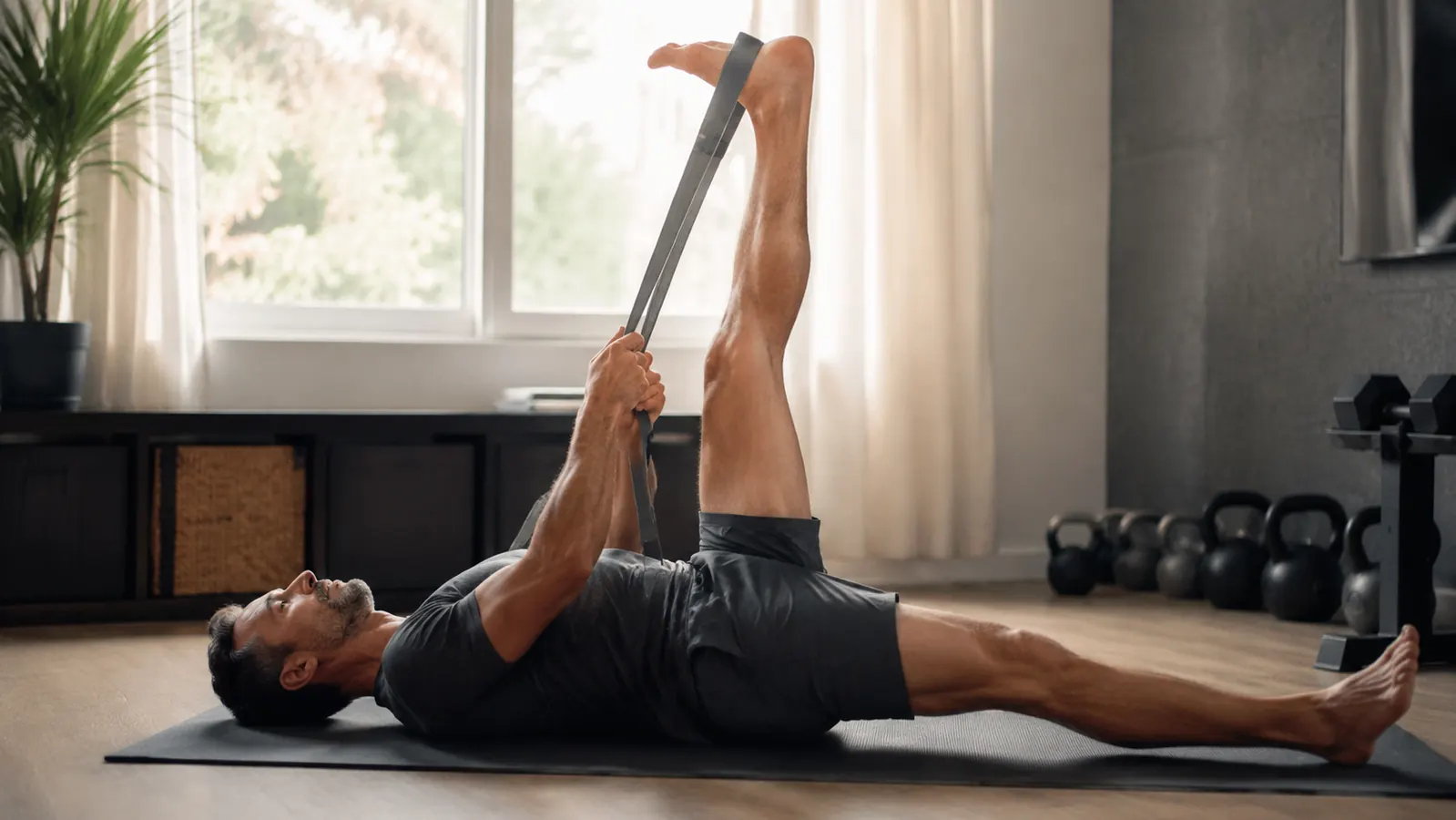
I bought the OPTP Stretch Out Strap about a year ago after my right hamstring had been complaining through every run and cycling session for three months straight. I'd been stretching, but only with whatever reach I could manage on my own, and my flexibility had quietly gotten worse since my mid-thirties. My physical therapist had recommended the OPTP strap twice. I kept ignoring it because it looked too simple to matter. Eventually, at a low price point, I ran out of reasons to avoid trying it.
Twelve months later I still use it every morning, usually for 10 to 15 minutes before I leave the house. That consistency surprised me. Most recovery gear I've bought over the years gets used for two weeks, then lives on a shelf. This strap stayed because it does something I couldn't do without it: it lets me hold a clean, progressive stretch at the exact range I want, without straining to maintain the position. That sounds small. It isn't.
The Quick Verdict
The most consistent daily-use recovery tool I own, and the cheapest. The included exercise book is genuinely useful, not filler. One real limitation: the strap offers no resistance, so it's a stretching tool only, not a strength or mobility-loading tool.
Amazon Check Today's Price →If your flexibility has quietly declined since your thirties, this is where I'd start.
The OPTP Stretch Out Strap is the recovery tool my physical therapist kept recommending until I finally listened. Budget-friendly, 10 minutes a day, and a year later I'm still using it every morning.
Amazon Check Today's Price on Amazon →How I've Used It (and Why Daily Use Changed My Perspective)
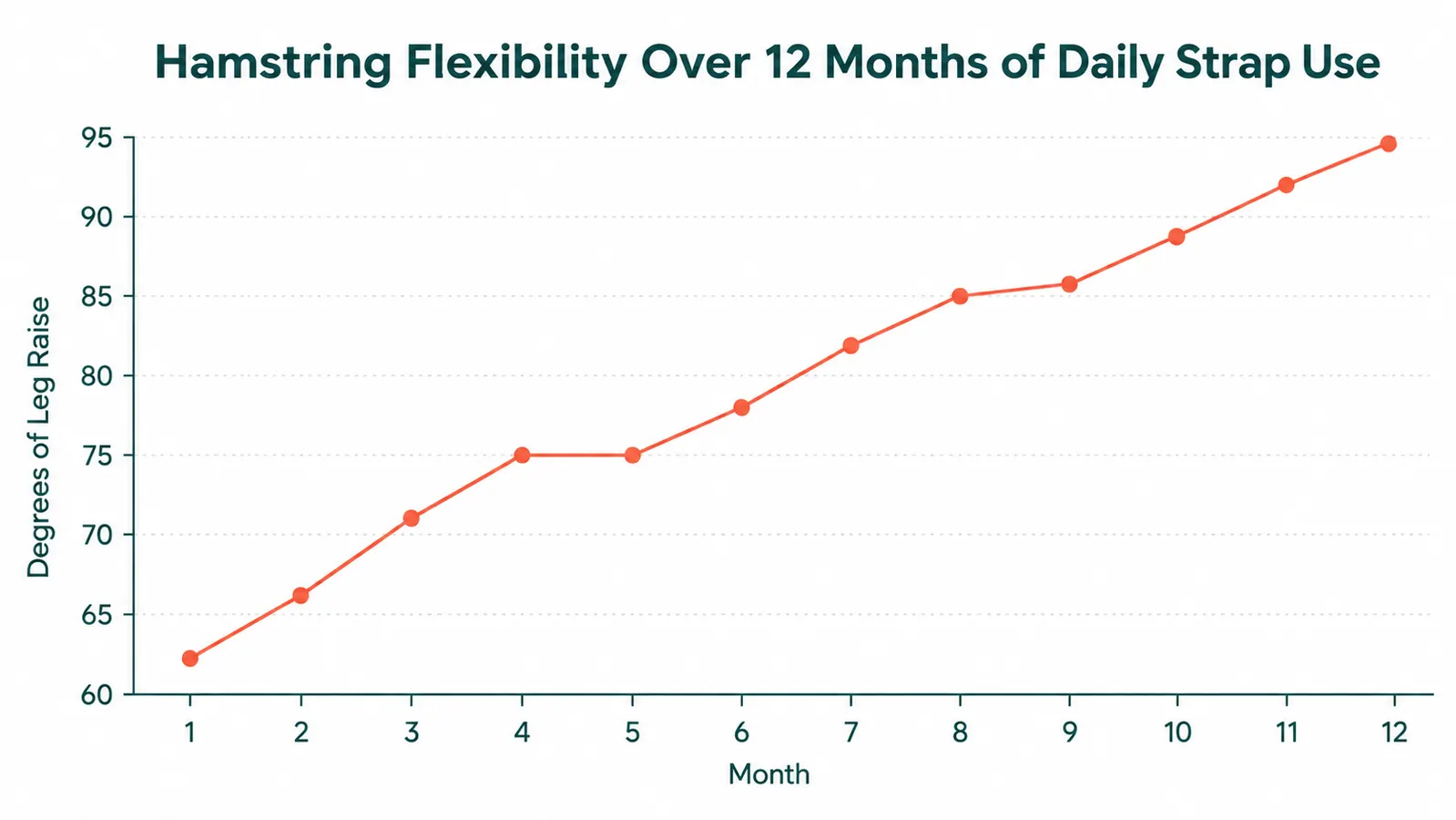
My baseline when I started: I could barely get my right leg to 70 degrees in a supine hamstring stretch before my lower back started compensating. My left was around 78 degrees. Both numbers were embarrassing for someone who has run casually for 20 years. I took a rough measure using a door frame as a vertical reference at the start, at 90 days, and at 6 months. By month three, I was at around 82 degrees on the right. By month six, roughly 88. I stopped measuring formally after that, but the subjective change was clear: my hamstrings stopped feeling like they were braking during every run.
My routine is not complicated. I do it lying on a foam mat in my bedroom before I shower. The whole sequence takes about 12 minutes and covers hamstrings, calves, hip flexors, and a few shoulder stretches I added from the book. The strap makes this possible at that pace because I'm not fighting for position. I loop it around my foot, exhale into the stretch, and use the next loop closer in to get another centimeter or two of range when the muscle relaxes. That incremental progression within a single set is the main reason this works better than static stretching without a strap.
The Loops: What They Actually Enable
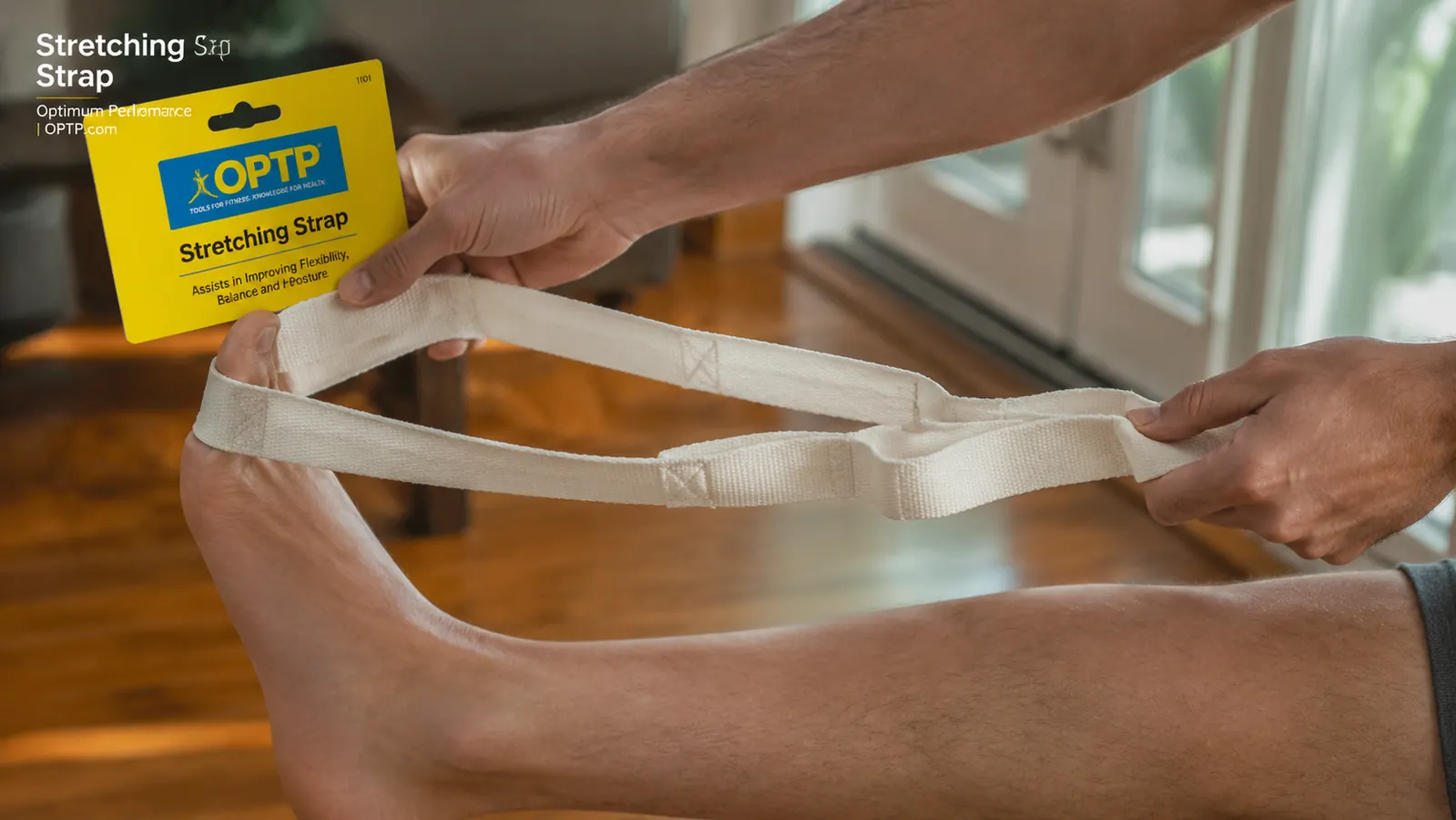
The OPTP strap has ten loops sewn across its 6.5-foot length, spaced roughly four to six inches apart. Most yoga straps have one loop, maybe two at the ends. That's the main structural difference that changes what you can do. With a single-loop strap, you set a fixed position and hold it. With the OPTP strap, you begin at a comfortable loop, hold for 15 to 20 seconds while the muscle releases, then move one loop closer to get a slightly deeper range. You're making micro-progressions within the same stretch, which is closer to how assisted stretching in a PT setting actually works.
For hamstring work especially, this matters. The hamstring doesn't respond well to being jerked into a deeper position. It responds to sustained tension followed by a brief relaxation, then slightly deeper tension. The loop system makes that pattern easy to execute on your own. I've gotten more out of 15 minutes with this strap than I used to get from 30 minutes of floor stretching without it, simply because the mechanics are cleaner.
For calves and hip flexors, the loop system matters less. You can use a single loop at a fixed position and it works fine. So the loop count is most valuable for the large posterior chain muscles, which happen to be the muscles most people need help with most.
Material and Durability After 365 Uses
The strap is woven nylon, not cotton webbing. It has a slight sheen to it and holds its shape well. After a year of daily use, my strap has zero fraying at the loop seams, no stretching of the webbing itself, and no weakening at the foot loop where most of the tension goes. The stitching at each loop is reinforced and has shown no signs of coming undone. I would describe the construction as quietly overbuilt for something at this price.
One practical note: it does pick up lint and fuzz from yoga mats, especially if your mat sheds foam. It wipes clean easily with a damp cloth. I haven't run it through a washing machine but the manufacturer recommends hand washing. The color is a clean off-white that does show dirt faster than a darker strap would. That's a minor aesthetic complaint, not a functional one.
After 365 daily sessions, the stitching at every loop is still tight. For something at this price point, that build quality is not what I expected going in.
The Exercise Book: Unusually Useful, Actually
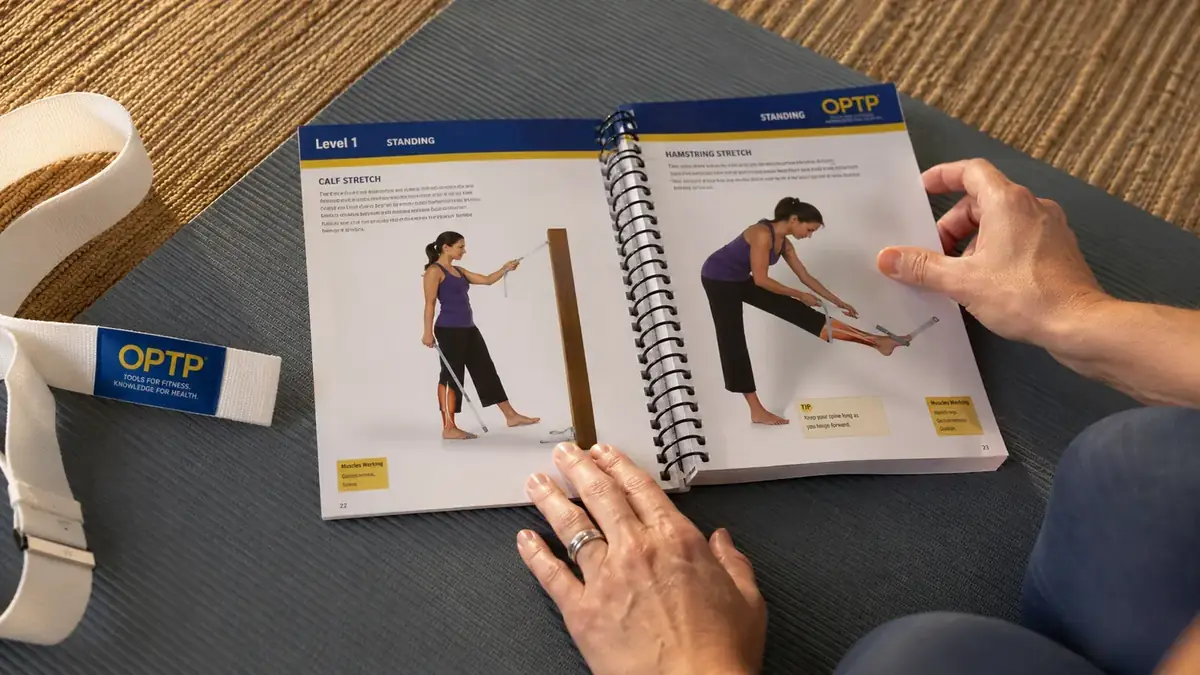
The OPTP Stretch Out Strap comes with a spiral-bound exercise booklet that covers around 30 stretches. I expected it to be boilerplate. It's not. The stretches are organized by body region, each diagram is clear, and the instructions specify which loop to start on, how long to hold, and what the target muscle should feel. There are sequences for runners, for desk workers, and for overhead athletes. I used it as my primary reference for the first two months before I had the routine memorized.
If you buy this strap and ignore the book, you'll still benefit from the tool, but you'll leave options on the table. The shoulder and thoracic stretches in particular were new to me and addressed stiffness I didn't realize I had from years of sitting at a desk. The book was written by physical therapists and that lineage shows in the progression logic. It builds from simpler to more complex patterns rather than just listing 30 random moves.
Performance Over Time: What Changed and What Didn't
What changed clearly: hamstring range of motion, calf flexibility, and the low-grade tightness I used to carry in my hip flexors through the afternoon. My morning runs feel less stiff for the first mile. The hip flexor improvement took the longest, roughly four months before I noticed it during runs, but it's the one I care about most because it directly affects stride.
What didn't change: quad tightness. The strap is limited for quad stretching because it requires standing or prone positions that are harder to stabilize when you're using a long strap. I still do quad stretches without it. And the strap doesn't address thoracic rotation well. I use a foam roller for that. The strap is excellent for one-dimensional linear stretching of long muscles. It's not a replacement for rotational mobility work.
One honest limitation worth stating plainly: this tool requires consistency to deliver results. If you use it three times and then let it sit, you won't notice much. The gains I've described came from doing the same 12-minute routine nearly every morning for a year. That's a commitment, not a magic product. The strap makes the routine efficient enough that I've stuck with it. That's the real value.
Alternatives I Considered
Before buying the OPTP strap, I tried three alternatives. A basic cotton yoga strap from a local studio supply store lasted about four months before the loop buckle slipped under tension. A resistance band, which I'd been using as a makeshift stretch assist, kept rolling off my foot mid-stretch. And a physical therapy appointment, which was costly per session, taught me good patterns but wasn't something I could sustain daily. The OPTP strap costs less than half a single PT visit and, once you understand the exercises, delivers the same quality of assisted stretch at home.
The closest actual competitor is the Tumaz yoga strap, which costs less and comes in more colors. The Tumaz has a D-ring buckle system for adjustable loop sizing and is made of cotton canvas. It works. But it has two loops at most with the buckle adjusted, not ten fixed loops, and the cotton material is less resilient under repeated tension than the OPTP nylon webbing. For occasional studio use, the Tumaz is fine. For daily recovery-focused use over a full year, the OPTP holds up better and gives you more precision. I'd compare both more thoroughly in a separate piece, but the short answer is: the OPTP is worth the small price difference for serious daily use.
What I Liked
- Ten loops enable micro-progression within a single stretch, which is how good assisted stretching works
- Nylon webbing held up to 365 daily sessions with zero fraying or loop failure
- Included exercise book is written by PTs, organized logically, and actually teaches you something
- Stays put on bare feet without slipping, even during sustained tension holds
- At this price point, it costs less than half a single physical therapy session
- Light and compact enough to travel with easily, rolls up in a gym bag
Where It Falls Short
- Picks up lint from foam mats; off-white color shows dirt faster than a darker strap would
- Quad stretching is awkward with this format; better to use other methods for quads
- No resistance capability, so it's stretching only, not strength or end-range loading
- Results require consistent daily use; occasional users won't see meaningful change
Who This Is For
This strap is genuinely well-suited for active adults in their thirties through sixties whose flexibility has declined over time, especially runners, cyclists, and people who sit at a desk most of the day. If tightness in your hamstrings, calves, or hip flexors is affecting how you move or recover from training sessions, this tool directly addresses that in a way that's sustainable to do every day. It's also the right choice for anyone who has been told by a PT to stretch more and wants a structured way to do that at home without paying for constant supervised sessions. Physical therapists have been recommending this specific strap for decades, and the reason is that it works consistently for exactly this use case.
Who Should Skip It
If your main mobility issue involves thoracic rotation, hip external rotation, or any movement pattern that requires you to stretch in multiple planes simultaneously, a strap alone won't cover it. You'd get more value from a good foam roller, a mobility course, or regular assisted stretching with a trainer. Similarly, if you're looking for something that also builds end-range strength (isometric resistance at the end of a stretch), this strap has no resistance component and isn't the right tool for that. It's a pure passive flexibility tool. Exceptional at that job, limited outside of it.
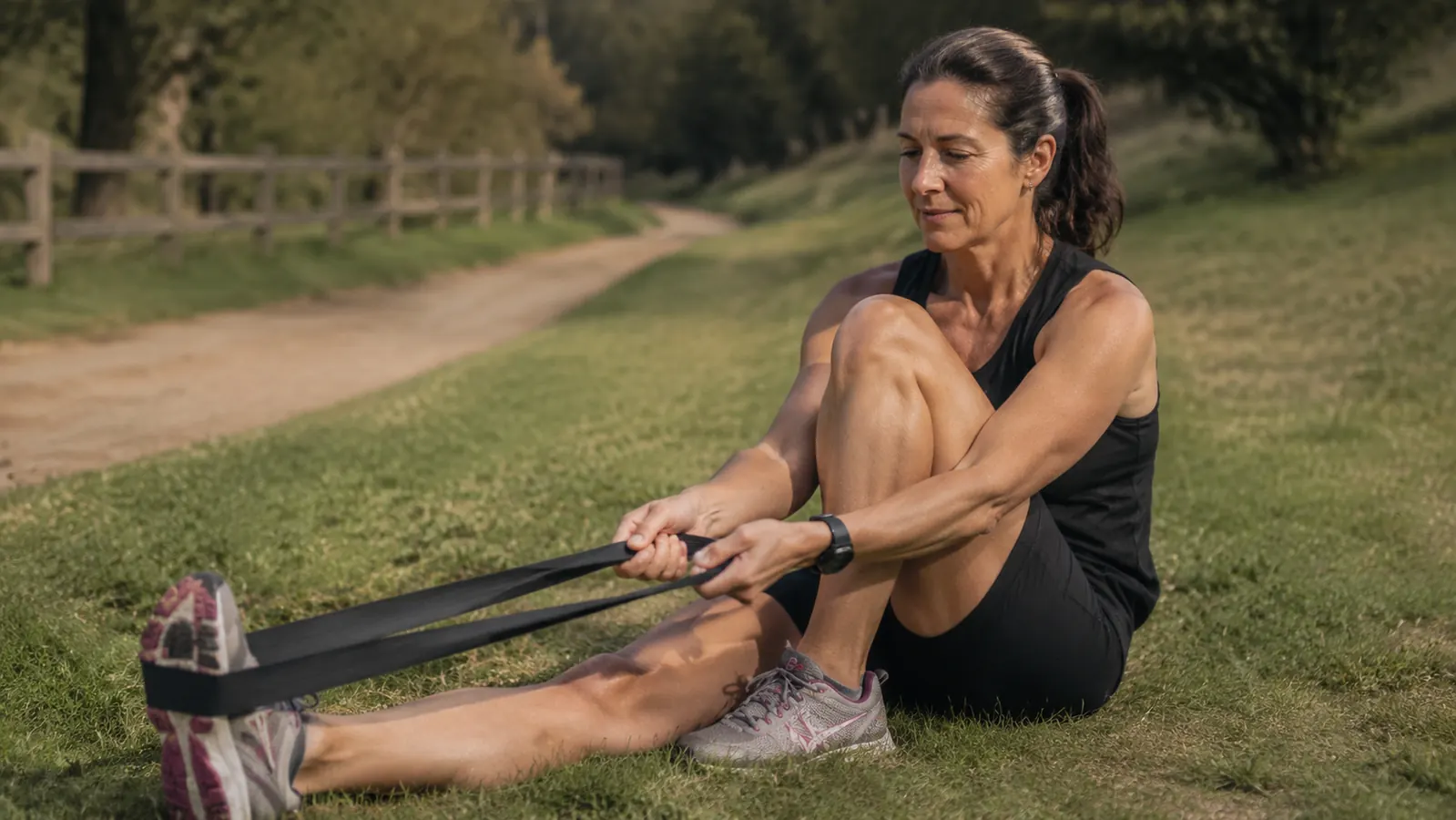
A year later, it's still the first thing I reach for every morning. At this price, the downside risk is nearly zero.
The OPTP Stretch Out Strap is the most consistent recovery habit I've built in years, and it costs less than a single PT copay. If tight hamstrings or hip flexors are slowing down your training or your mornings, this is a straightforward place to start.
Amazon Check Today's Price on Amazon →