If you have been active for most of your adult life, you already know that recovery at 40 or 50 is not what it was at 25. Soreness hangs around longer. Tight hamstrings limit your stride before you even warm up. Hip flexors that were never a problem now grumble after a long day at a desk or a hard training session. Most people just accept it. The ones who do not are usually holding a stretching strap.
The OPTP Stretch Out Strap has been a physical therapy staple for decades. It has 10 loops, a sturdy nylon weave, and it comes with a detailed exercise book. At its price point, it is one of the cheapest recovery tools you can actually use every day. Here are 10 concrete reasons it earns a spot in your routine.
Your hamstrings are tighter than they need to be. The fix costs less than a single co-pay.
The OPTP Stretch Out Strap has 4.7 stars across more than 27,000 reviews and comes with a full exercise book. It is the strap physical therapists hand to patients on day one.
Amazon Check Today's Price on Amazon →It Lets You Stretch Further Without a Partner
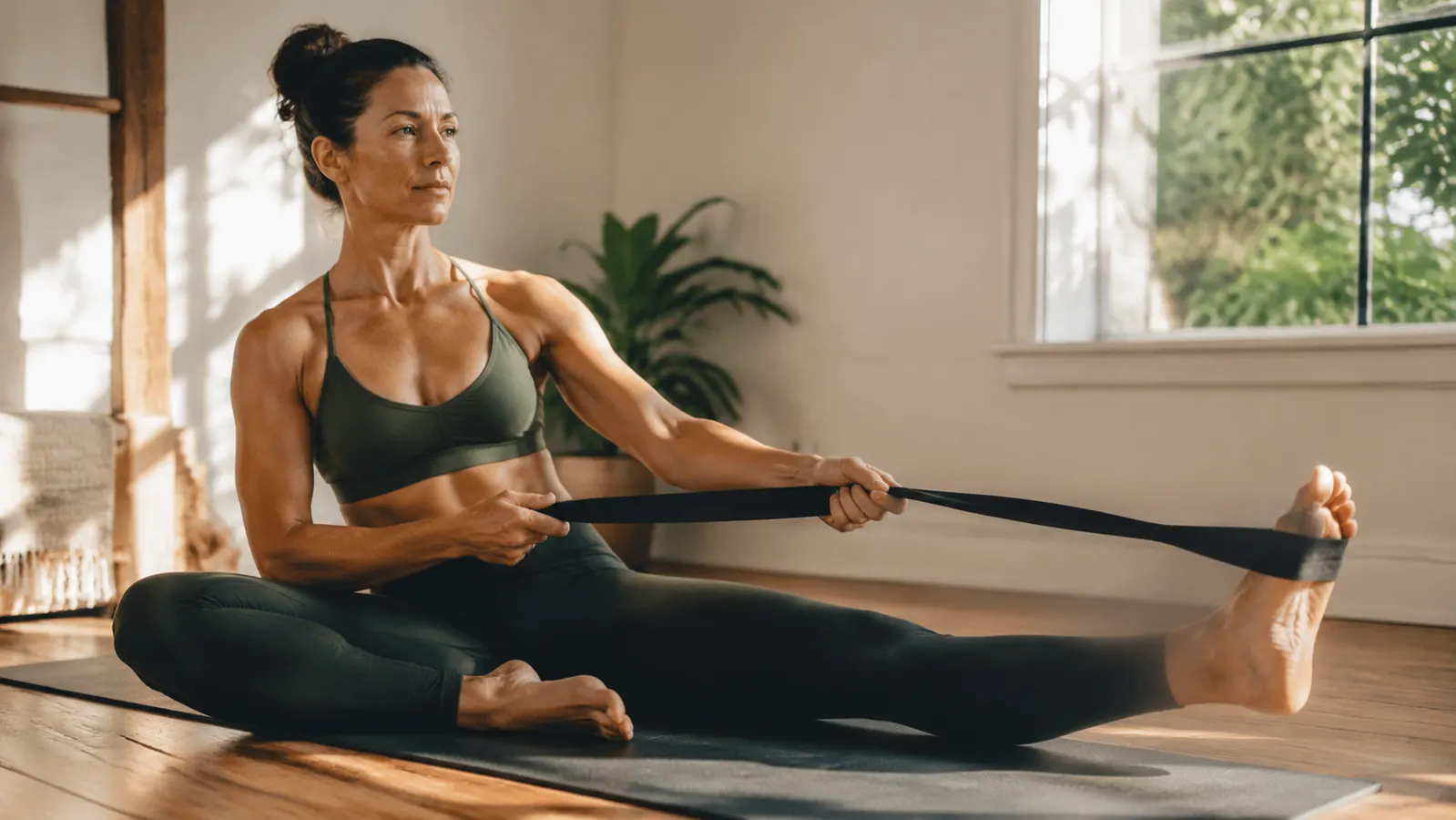
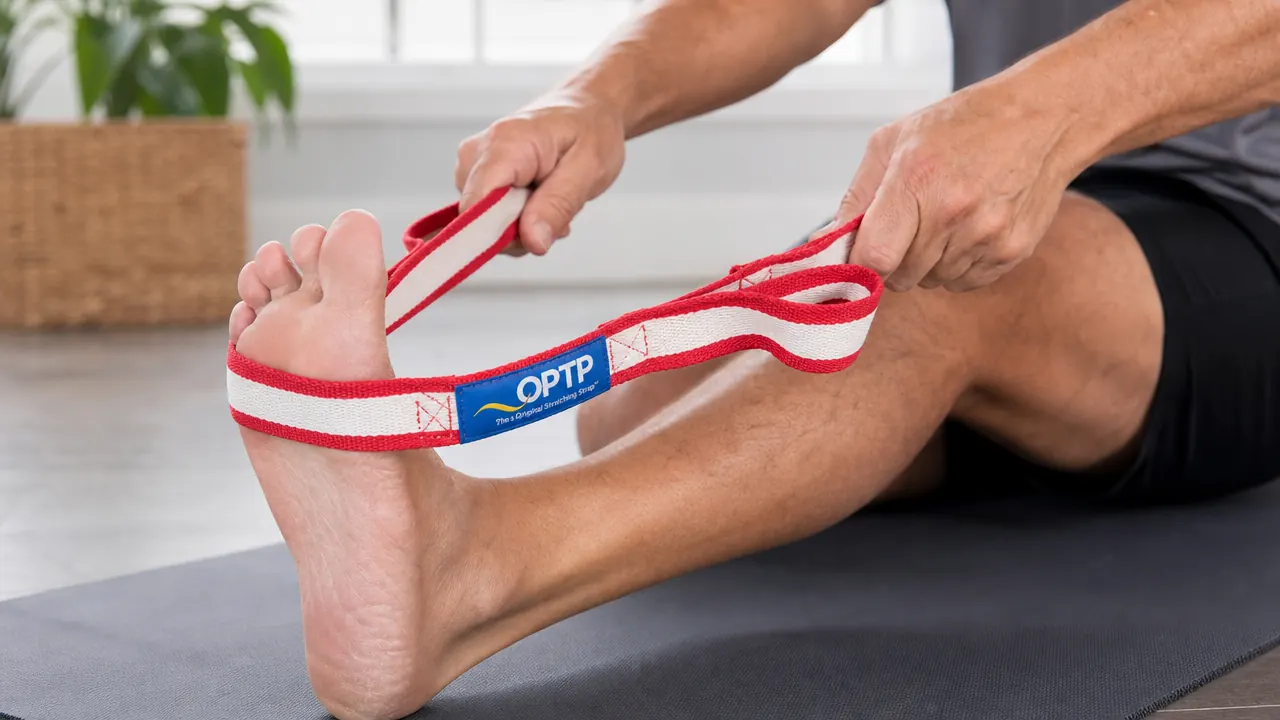
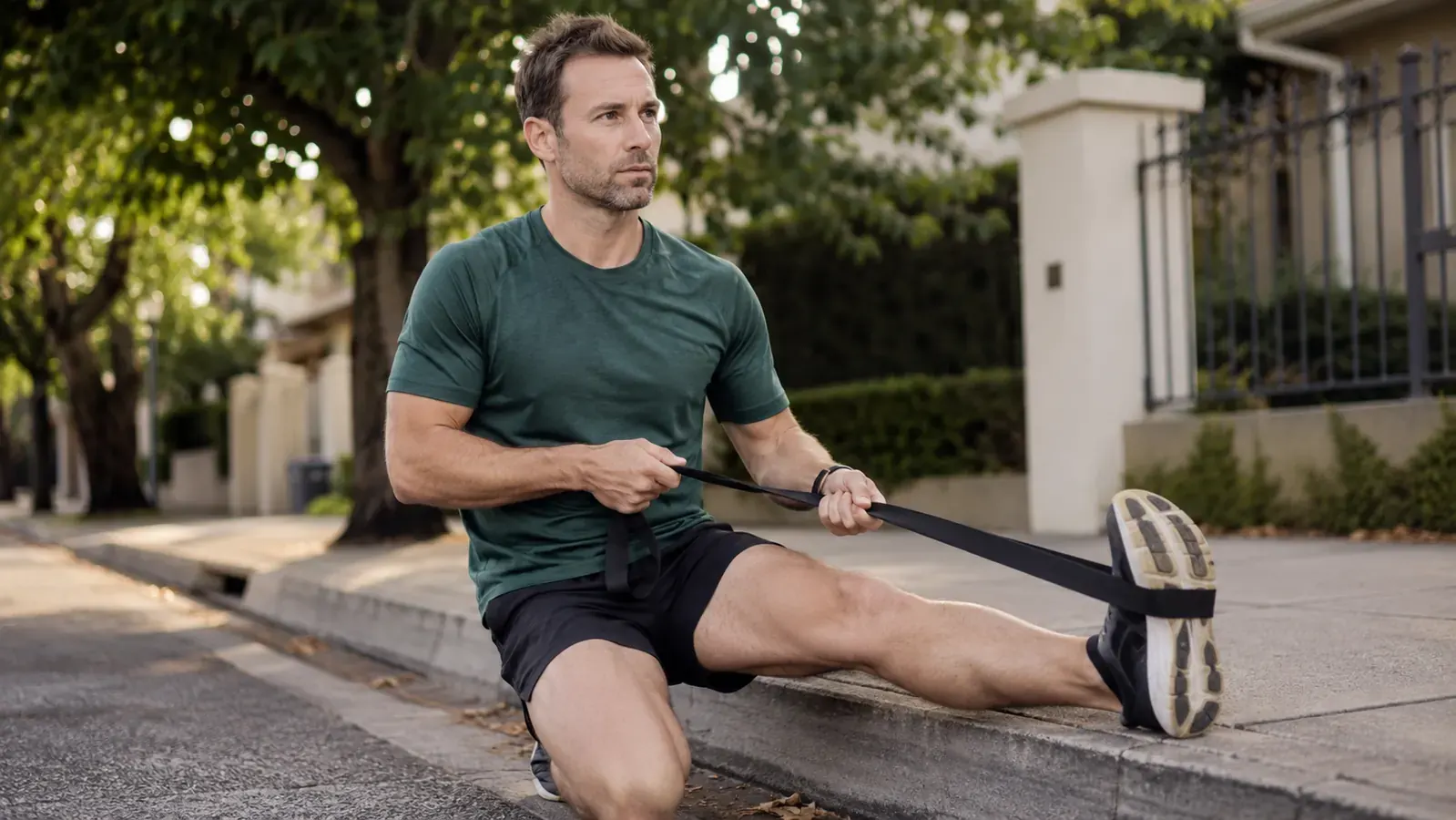
Most deep flexibility work, especially hamstring and hip stretches, is almost impossible to do effectively alone. You either need a partner to push your leg, or you grab your ankle and immediately lose the form. The strap loops around your foot and lets you control the pull precisely, hands at different distances along the strap, so you can ease in and hold without compromising position. Solo stretching suddenly works the way it is supposed to.
The Multiple Loops Give You Incremental Control
A plain yoga strap with a buckle makes you stop, release tension, and re-cinch to adjust. The OPTP strap has 10 fixed loops. You walk your hands to the next loop and the stretch deepens by a measured inch. That incremental control is the difference between a useful hold and an aggressive yank that triggers a muscle cramp. For anyone with chronically tight calves or hip flexors, the loop system is not a minor detail.
It Works Across Every Major Muscle Group
Hamstrings are the obvious use case. But the same strap handles IT band stretches, shoulder and chest openers, thoracic spine rotation, hip flexors, calves, and even ankle flexibility work. The included exercise book lays out the technique for each. One tool covers the entire body, which matters when you have limited time and are not about to buy six different accessories.
Consistent Strap Work Visibly Reduces Next-Day Soreness
Post-training muscle soreness, the kind that makes stairs painful two days after leg day, is partly a circulation and tissue tension issue. Prolonged assisted stretching helps flush metabolic waste, encourages blood flow, and reduces the protective tension muscles hold after hard effort. Ten minutes of strap work the evening after a hard session consistently leads to less stiffness the next morning for most regular users, and the reviews echo that pattern.
It Protects Range of Motion You Have Already Built
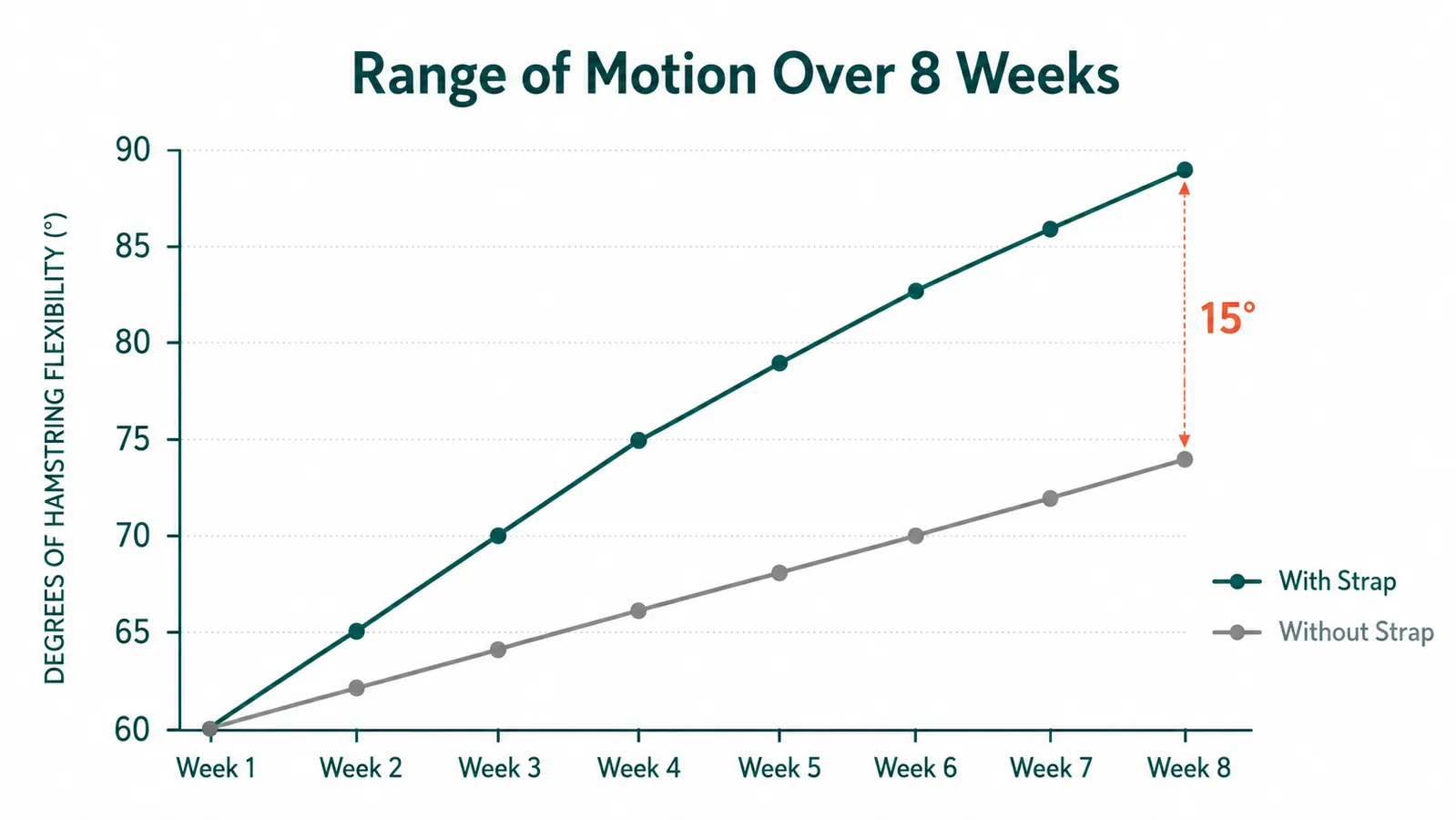
Most people do not lose flexibility because they stop doing yoga. They lose it because they sit, train hard without counterbalancing, and skip the ten minutes of maintenance work that would preserve what they have. A stretching strap makes that maintenance work specific and repeatable. You are not guessing whether the stretch is hitting the right spot. You feel it in the target tissue every time, which makes it far easier to be consistent.
It Is Safe for People Coming Back From Minor Injuries
The strap lets you set your own ceiling. You are never locked into a position by gravity or a partner. If your hamstring or hip starts to signal too much, you release the loop and you are done. For anyone working around a tweaked knee, a cranky sciatic nerve, or residual tightness from a muscle pull, that level of self-control makes the strap one of the few stretching tools that is still safe to use while managing a nagging issue. Always check with a medical professional before stretching an acute injury.
It Takes Up Essentially No Space
A foam roller takes a shelf. Compression boots need a bag. A percussion gun needs charging. The OPTP strap rolls into a coil smaller than a water bottle and fits in a gym bag side pocket. You can take it to a hotel room, a morning run, a travel day. The tools you actually use are the tools you can take anywhere, and this is about as portable as recovery gear gets.
The Exercise Book Actually Gets Used
Most included accessories are an afterthought. The OPTP Stretch Out Exercise Book is not. It was written to accompany the strap specifically, includes clear illustrations for each stretch, and explains which muscles each movement targets. If you have never done structured assisted stretching before, it removes the guesswork entirely and gives you a real starting routine on day one. Experienced users tend to graduate past it quickly, but it earns its place.
It Is the Same Tool Physical Therapists Use in Clinic
The OPTP name comes up in physical therapy settings not because of marketing, but because the strap is genuinely useful in a clinical context. When a PT hands you this exact tool to use at home between sessions, it is an indication that the design works well enough to represent formal rehabilitation care. For active adults trying to bridge the gap between PT sessions or avoid needing them in the first place, using the same tool PTs use is a reasonable starting point. Read the full OPTP Stretch Out Strap review for a year of real-world use data.
It Stacks Well With Everything Else in Your Recovery Kit
Strap stretching pairs cleanly with foam rolling, compression boots, heat therapy, and mobility work. A short strap session after using a foam roller on your quads and IT band takes the tissue work one step further by putting the lengthened muscle under a controlled hold. If you are building a recovery routine incrementally, the stretching strap is an easy first add because it complements everything else without duplicating any of it. For a full daily routine built around the strap, the guide on how to use a stretch strap in 10 minutes a day walks through it step by step.
What I'd Skip
If you are mostly dealing with upper back tightness or neck tension, the strap is a limited tool on its own. It shines on the lower body and shoulders, but it cannot replicate what a heating pad or percussion massager does for a knotted trapezius. It is also not a substitute for actual mobility training if your range of motion has dropped severely. In that case, a structured program with a coach or physical therapist is what you need first. The strap is a maintenance and recovery tool, not a replacement for progressive training.
A stretching strap does not replace hard work on your flexibility. It just makes the ten minutes of daily maintenance work specific enough that you actually feel it doing something.
Ten minutes before bed. That is all it takes to make tomorrow's workout feel different.
The OPTP Stretch Out Strap is rated 4.7 stars by more than 27,000 buyers. It costs less than most co-pays, lasts for years, and comes with a full exercise book so you know exactly what to do with it.
Amazon Check Today's Price on Amazon →