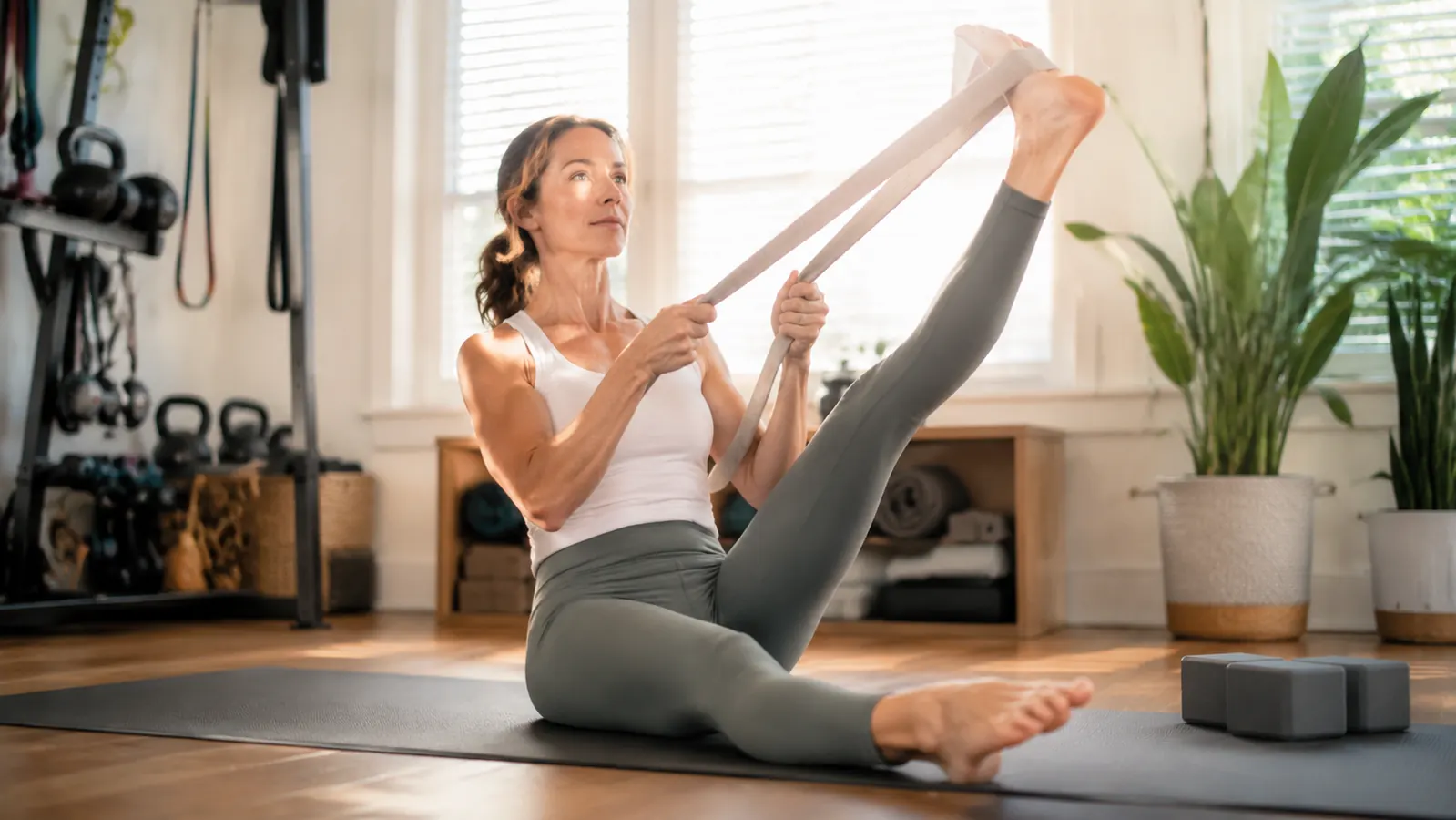
If your flexibility has quietly deteriorated over the past few years, you are not imagining it. Once you hit your mid-30s, the connective tissue around major joints tightens faster than most people expect, and without a consistent stretching routine, the gap between where you are and where you want to be compounds every season. The problem for most active adults is not motivation. It is that classic static stretching, the kind where you sit and reach toward your toes and hold for 30 seconds, does not give you enough control to make real progress. You cannot modulate the angle, you cannot isolate a single muscle from the group, and you release the hold the moment it starts to get uncomfortable.
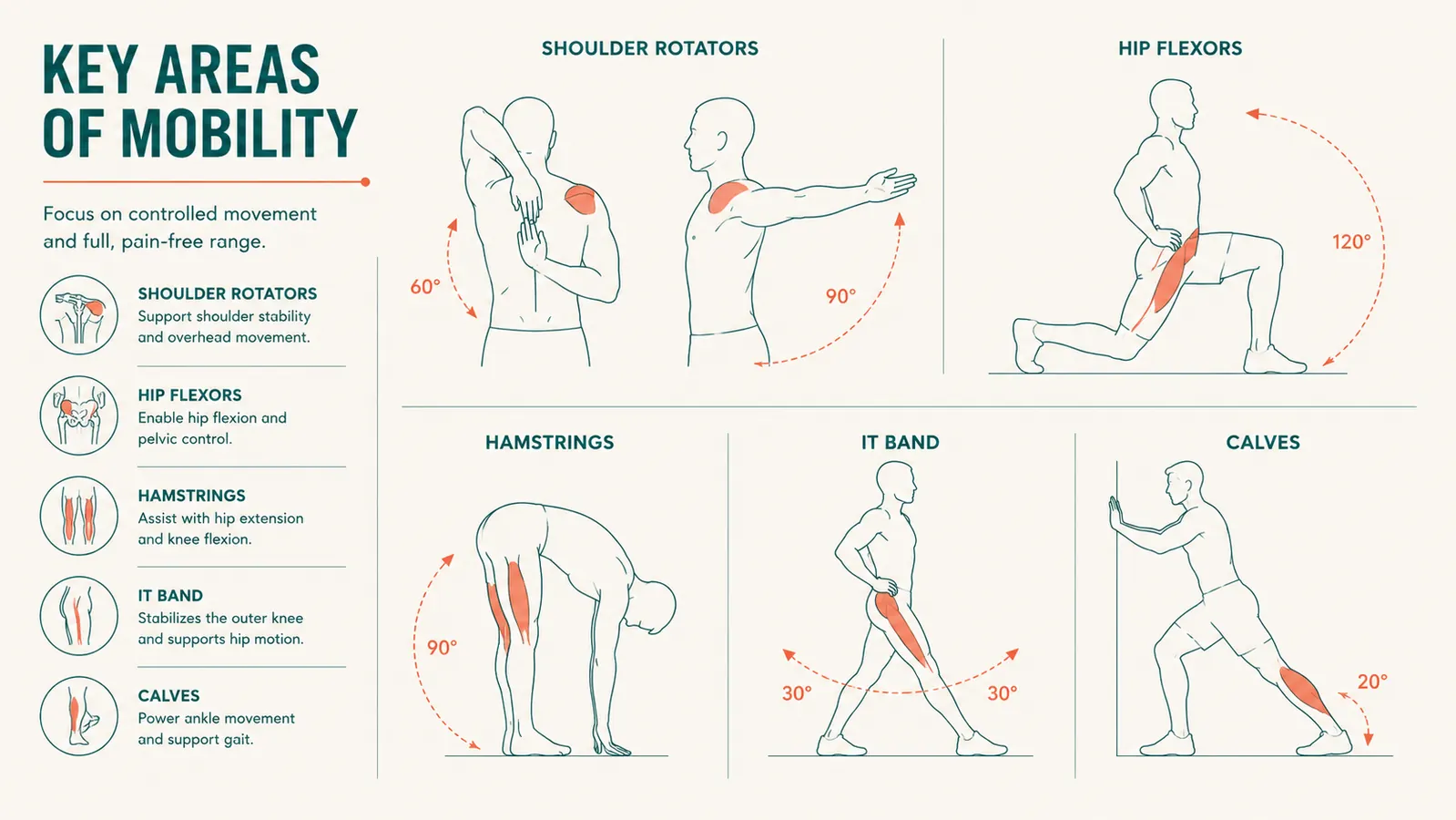
A multi-loop stretching strap changes that equation. With loops at incremental positions along a single strap, you control exactly how far you go, and you can make small adjustments mid-stretch without losing position. The OPTP Stretch Out Strap has been the physical therapist standard for this kind of work for decades. It costs less than one physical therapy copay, weighs almost nothing, and the exercise book that comes with it contains over 50 moves with clear photographs. This guide walks you through a focused 10-minute daily routine that hits the four areas where most active adults lose flexibility first: hamstrings, hip flexors, calves, and shoulders.
If tight hamstrings or stiff shoulders are limiting your training, the OPTP strap is the tool that fixes the consistency problem.
The OPTP Stretch Out Strap has 4.7 stars from over 27,000 buyers and is the same strap physical therapists hand to patients for home use. The cotton loops hold under load and the included exercise book is genuinely useful.
Amazon Check Today's Price on Amazon →Before You Start: What Makes a Multi-Loop Strap Different From a Yoga Strap
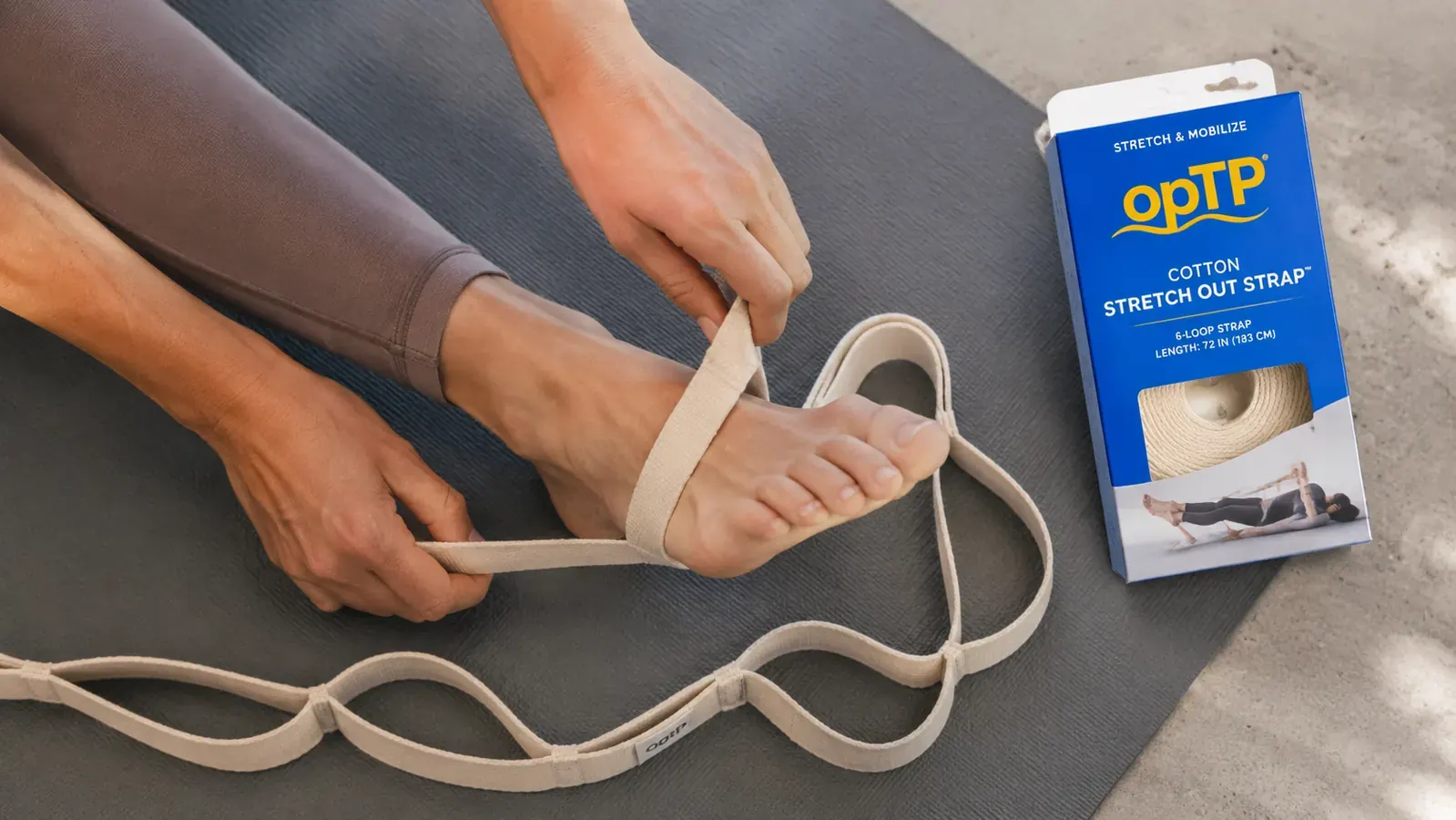
Most yoga straps are a single loop or a straight strap with a buckle. They work fine for holding a pose, but they are not designed for active-assisted stretching, where you move from one range of motion to the next in a controlled sequence. The OPTP Stretch Out Strap has a continuous row of loops spaced about two inches apart, which means you can walk your grip up one loop at a time to progressively deepen a stretch over the course of a session. You are never making a big, scary leap to more range of motion. You are making small, repeatable adjustments that your nervous system can accept.
That detail matters more than it sounds. Flexibility gains come from teaching the nervous system that a new range of motion is safe, not from forcing connective tissue to stretch further. Slow, progressive, controlled work with feedback (your hands gripping a loop) achieves that far more reliably than static floor stretching. It is why physical therapists reach for this specific tool rather than a yoga block or a generic strap. The cotton material also gives just enough texture to grip without slipping, even during longer holds when your hand position might shift.
Step 1: Hamstring Series (3 Minutes)
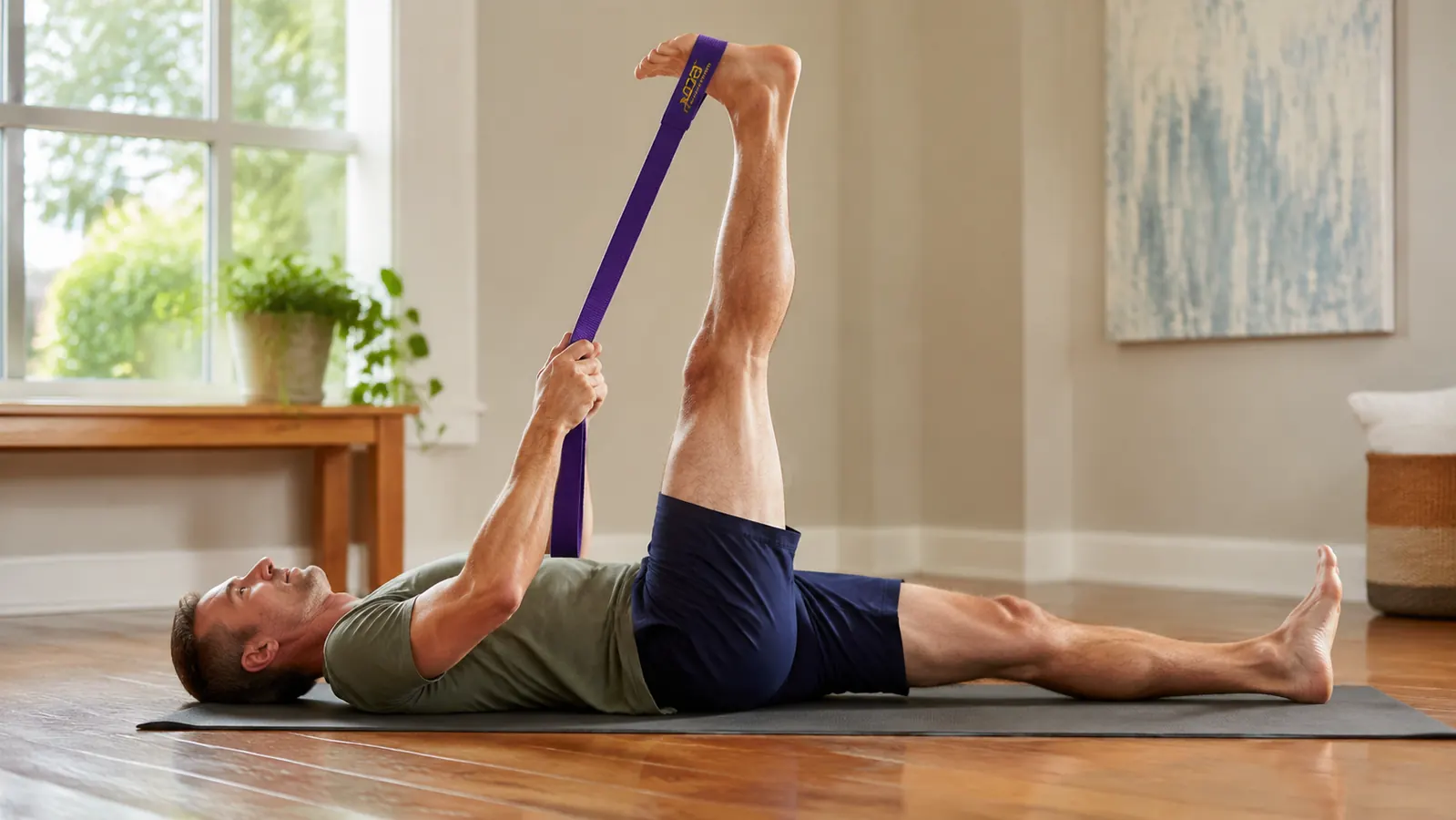
Lie flat on your back on a firm surface, a yoga mat on a hard floor is better than a bed or soft carpet. Place one heel in a loop near the center of the strap, hold both ends of the strap in the hand on the same side, and extend your opposite leg flat on the floor. Slowly raise the strapped leg, keeping it straight, until you feel a moderate pull in the back of the thigh. This is not a pain point. It is a tension point. Hold there for 20 seconds.
After the first hold, walk your grip up one loop. You will likely find you can accommodate that extra inch of range after the previous hold released some of the initial tension. Hold again for 20 seconds. Repeat one more time. Then switch sides. The whole hamstring series takes about 3 minutes and covers both legs in three progressive holds each. If your hamstrings are extremely tight on day one, do not force the third loop advance. Stay at two holds per side until the range opens up, which typically takes 5 to 7 sessions.
While you are in this position, you can also add an internal rotation variation by pointing your toes toward the floor and holding for 15 seconds, then pointing them toward the ceiling for another 15. This addresses the two bands of the hamstring group that run slightly differently and is a trick worth borrowing from physical therapy practice.
Step 2: Hip Flexor and Quad Series (2 Minutes)
Remain on your back and loop the strap around the top of your right foot, just above the toes. Roll to your left side. Gently pull the right heel toward your glutes, keeping the knee bent and your hips stacked. You will feel this primarily in the front of the right hip and the top of the quad. Hold for 25 seconds on each side. Use the loops to control how close the heel comes rather than pulling with your hand strength alone. Your grip should be relaxed, the strap doing the work.
Hip flexors are the muscle group most people let atrophy from sitting, and they are a major source of lower back tension during and after workouts. Even 90 seconds of controlled hip flexor stretching per session, done consistently, will show meaningful changes in hip extension within three to four weeks. The key is the consistency, not the intensity of any single session. Two minutes here is enough if you are doing this every day.
Flexibility is not built in one long session. It is built by showing up for 10 minutes every day and giving the nervous system no reason to resist the new range.
Step 3: Calf and Plantar Series (2 Minutes)
Return to lying on your back with one leg extended toward the ceiling and the strap looped around the ball of your foot this time, not the heel. Flex your foot so the toes pull back toward your shin. You will feel the stretch move from the upper calf down through the Achilles and into the plantar fascia. Hold for 20 seconds per side. Then, with the leg still raised, gently point the toes away and hold for 10 seconds to release any anterior shin tension before the next loop advance.
Calf tightness is one of the most common contributors to plantar discomfort, shin soreness, and even knee tracking issues. Runners, cyclists, and people who stand for long hours at work tend to have chronically short gastrocs, and a strap is one of the most efficient ways to address that without a foam roller or a specialized tool. This two-minute segment is worth doing even on days when you skip the rest of the routine.
If you have had any plantar fascia irritation in the past, work up slowly here. Day one, hold at a comfortable tension. Day five, walk up one additional loop. Never chase a burning or sharp sensation in the arch. Moderate, sustained tension is the signal you are looking for.
Step 4: Shoulder and Chest Opener (2 Minutes)
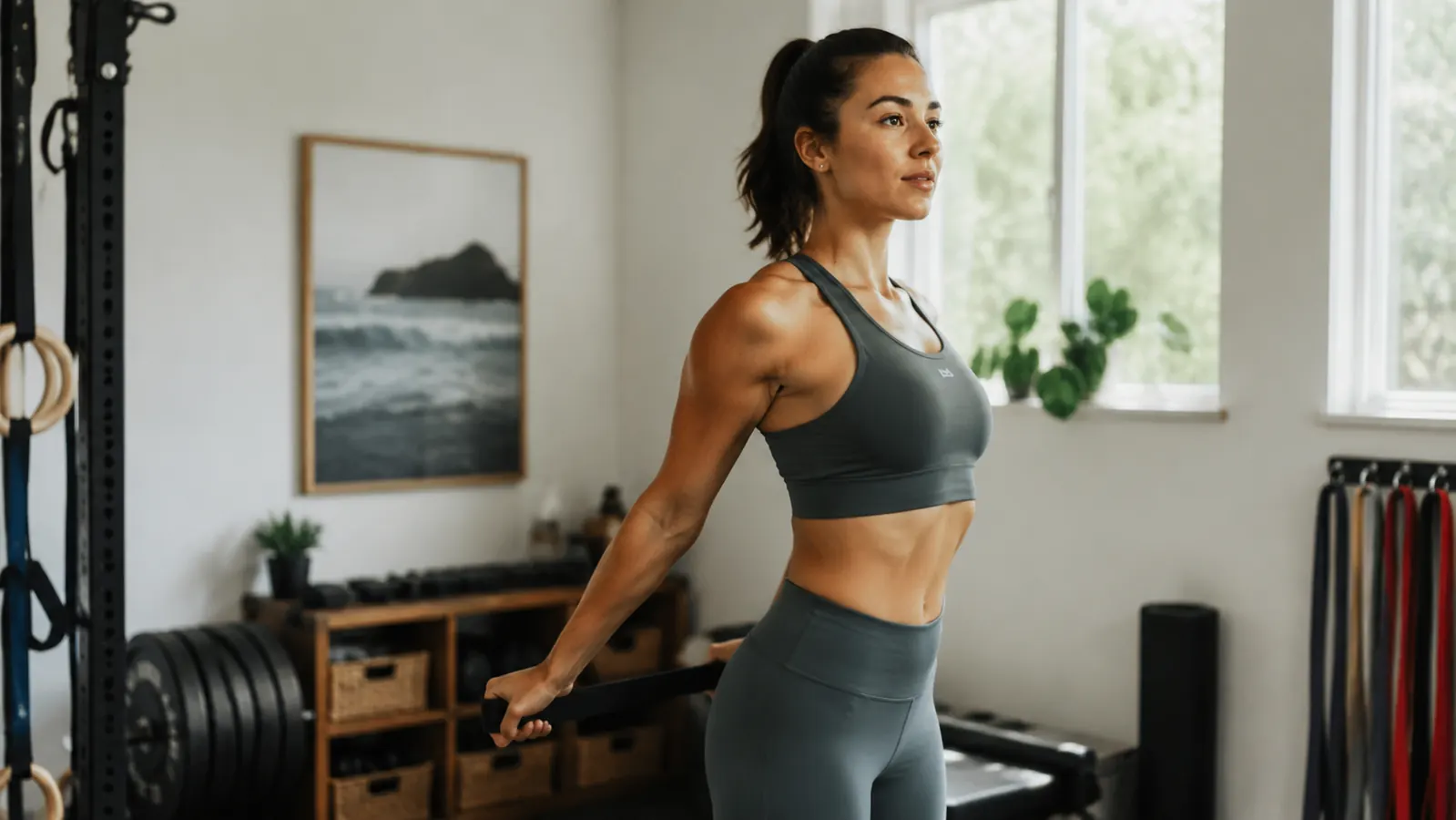
Stand up for this one. Hold the strap behind your back, one hand gripping from above (palm forward) and one from below (palm back). Walk your hands along the strap toward each other until you feel a moderate pull across the front of the shoulder and into the chest. Hold for 20 seconds. Switch which hand is on top and repeat. This targets the two primary shoulder rotation patterns that tend to tighten from desk work, driving, overhead pressing, or carrying bags on one side.
You can also do a straight overhead reach: grip the strap with both hands about shoulder-width apart, raise it overhead, and slowly arc it back behind your head as far as your shoulder mobility allows without arching your lower back. Stop at the first point of real resistance. Hold for 15 seconds. This is the thoracic and shoulder capsule version of the same progressive loading principle used in the floor work above.
Step 5: IT Band and Outer Hip (1 Minute)
Back on the floor. Loop the strap around your right foot. Lie on your back, raise the strapped leg to about 60 degrees, then guide it across your body to the left, keeping both shoulders flat on the floor. You will feel the pull along the outer thigh and into the hip. Hold for 20 seconds per side. This is the move that most people skip because the IT band stretch is awkward to do without a prop. With the strap, you can control the angle of the cross-body pull precisely, which makes it both more effective and more comfortable.
The IT band itself is not truly a muscle and does not stretch the way a hamstring does. What you are actually targeting here is the tensor fasciae latae and the hip abductors, which do respond to this kind of controlled lengthening. One minute per session across both sides is a reasonable maintenance dose for most active adults. If you have had knee tracking issues or a history of runner's knee, making this a daily habit is worth more than most expensive interventions.
What to Expect Week by Week
Week one will feel like you are just learning the positions. That is fine. The neurological adaptation (your nervous system learning to accept each new range) happens before the structural adaptation (actual changes in tissue length). You may not feel like much is happening in the first five sessions, and then in session six or seven you will notice you can reach a loop further than you could on day one. That is not an accident. That is the system working.
By week three, most people who stick with this routine will report noticeably reduced tightness in the hamstrings and a meaningful improvement in how the low back feels during the first hour of the day. By week six, the hip flexors will have released enough to make a visible difference in how you move during workouts, especially in deadlifts, lunges, or anything that requires hip extension. These are not dramatic overnight changes. They are the compounding result of 10 consistent minutes.
Do not measure progress by whether a single stretch feels easier each day. Measure it by whether you are advancing one loop from where you started three weeks ago. That is a concrete, trackable marker that confirms the work is accumulating. Take a photo of your starting hamstring position on day one so you have a reference point.
What Else Helps Alongside a Stretching Routine
Hydration is a genuine factor in connective tissue response. A mildly dehydrated person will feel more resistance during stretching than a well-hydrated one, simply because fascia loses some pliability when fluid content drops. Drinking 16 to 20 ounces of water before a stretching session makes a measurable difference in how far a given hold can go. It sounds too simple to matter, but it does.
Timing matters too. Flexibility work done after light physical activity, even a 10-minute walk, is more effective than cold morning stretching because muscle temperature affects tissue response. If you can pair this routine with the tail end of a light warmup, or use it as a post-workout cooldown, you will see faster progress than doing it first thing out of bed. That said, doing it first thing is still far better than skipping it. Do not let perfect timing become an excuse to skip the session.
Some people pair this strap routine with foam rolling on the same muscle groups first. Rolling increases surface blood flow and breaks up some of the mechanical adhesions that make initial stretching feel tight. The order that works best: roll for 2 to 3 minutes on a target area, then immediately go into the strap stretch for that muscle group while it is still warm. If you want to read more about how the OPTP strap compares to other recovery tools for this kind of layered routine, the long-term review covers that in detail.
See also: OPTP Stretch Out Strap Review: One Year of Daily Use and What I Actually Found and 10 Reasons a Stretching Strap Speeds Up Recovery for Active Adults Over 30.
Ten minutes a day is all this takes. The OPTP strap gives you the tool to make those 10 minutes actually count.
The OPTP Stretch Out Strap is rated 4.7 stars by more than 27,000 people. It comes with a thorough illustrated exercise book, travels flat in any gym bag, and holds up under daily use for years. If you have been meaning to fix your flexibility for months, today is a reasonable day to start.
Amazon Check Today's Price on Amazon →