
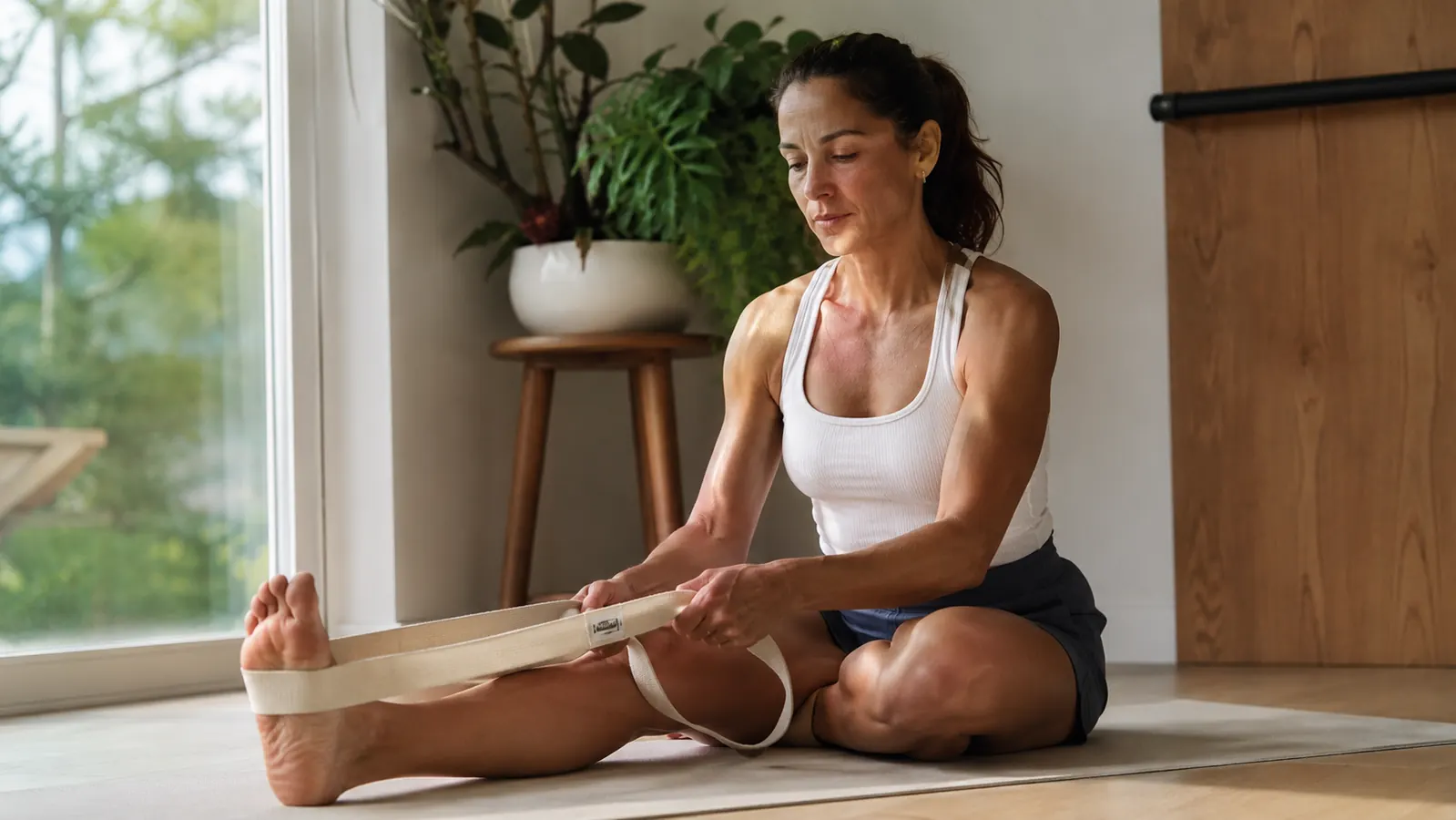
I want to be honest about how I came across the OPTP Stretch Out Strap. My physical therapist handed it to me after my third appointment for a stubborn hip flexor that would not cooperate. She did not explain it much. She just said, "Take this home. Use it every morning before you do anything else." That was it. No sales pitch. No alternative options. She had a drawer full of them. I found out later that PT clinics have been purchasing these in bulk for over 30 years. That fact alone made me curious enough to look harder at what is actually going on with a budget piece of nylon webbing.
This is not a repeat of the long-term usage review for this strap. Instead, I want to focus on the specific things that make this product unusual: why the loop design matters more than people think, what the included exercise book quietly teaches you, and where this strap genuinely falls short. If you are weighing whether to buy it, these are the details worth knowing.
The Quick Verdict
The loop system solves a real problem with assisted stretching that most people never think about. At this price, it earns its spot in any recovery kit, with one honest caveat about what it cannot replace.
Amazon Check Today's Price →Your hamstrings are probably tighter than you think. The strap that physical therapists hand to patients is available on Amazon for a modest price.
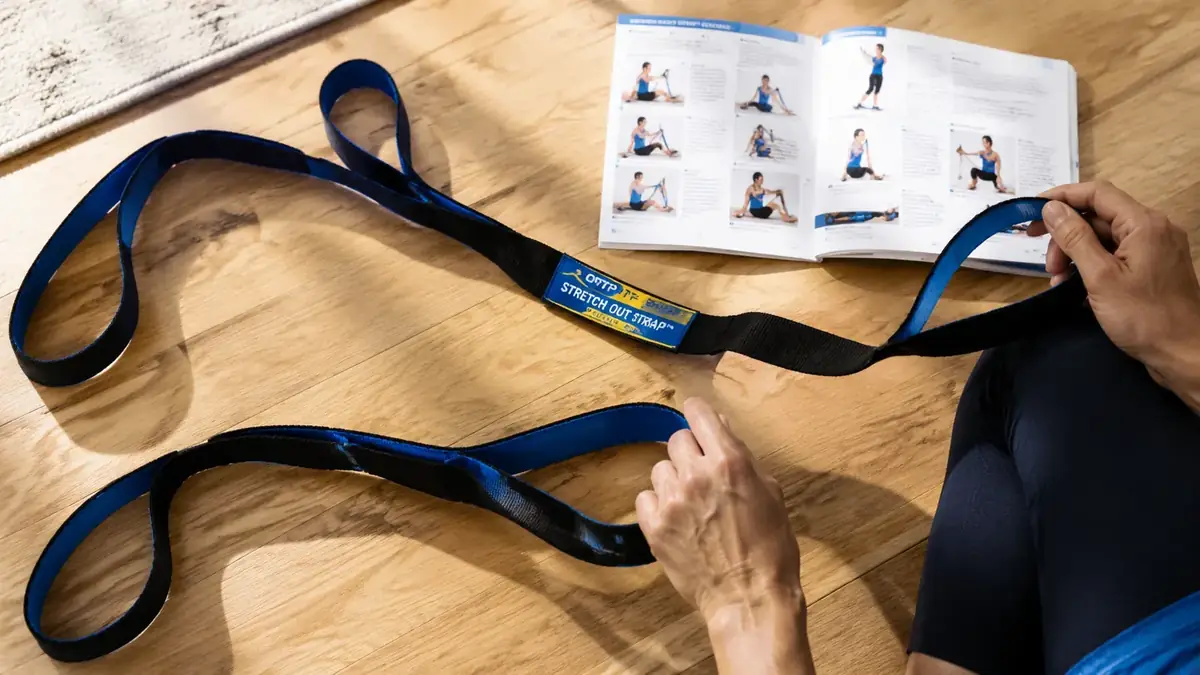
The OPTP Stretch Out Strap ships with a 28-page illustrated exercise booklet. Over 27,600 buyers have reviewed it at 4.7 stars. Check if it is in stock at today's price before you read on.
Amazon Check Today's Price on Amazon -> →What the Loop Spacing Actually Does
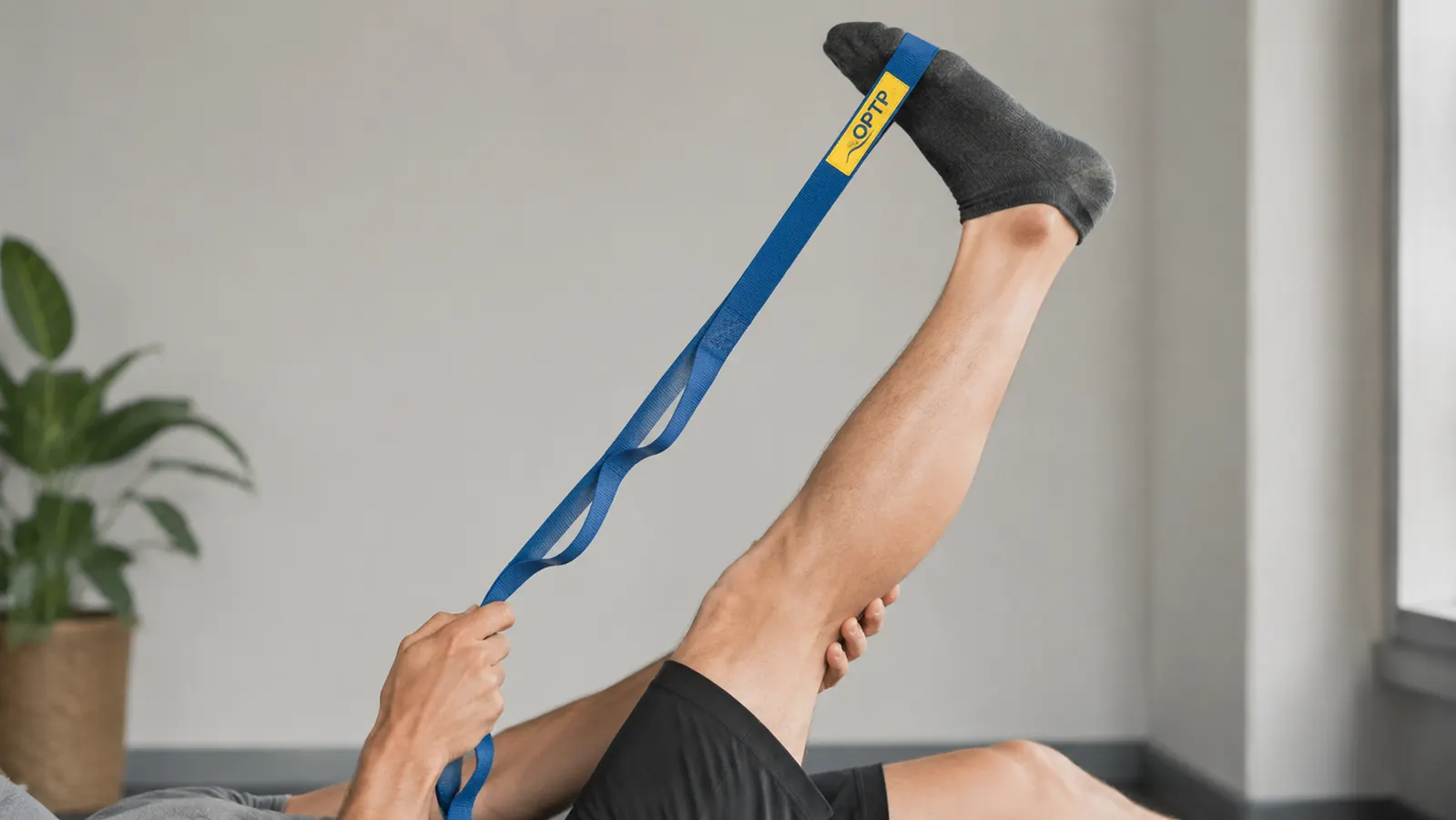
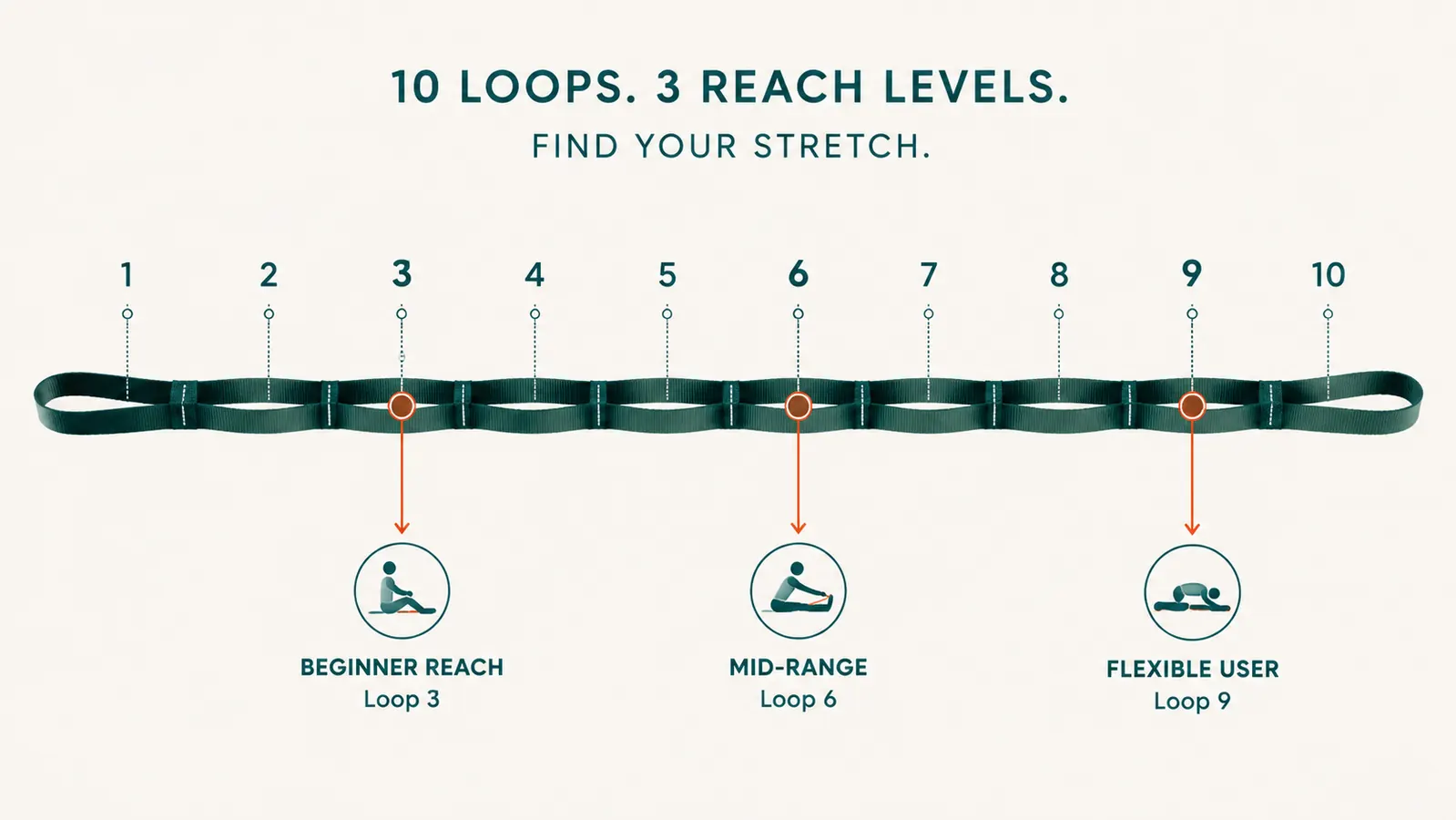
Most people who pick up this strap for the first time treat it like a yoga strap: they loop it around their foot, grab the end with both hands, and pull. That works, but it misses the actual engineering behind the design. The Stretch Out Strap has 10 loops spaced at roughly 3-inch intervals down a 6-foot length. That spacing is not decorative. It is what lets you adjust the effective reach of the stretch by moving your grip one loop at a time, without repositioning your whole body.
Here is why that matters in practice. When you are trying to do a supine hamstring stretch and your flexibility is limited, pulling hard on the end of a long rope or band puts your shoulder and elbow in an awkward position and usually turns into a lumbar flexion exercise rather than a hamstring stretch. The loop system fixes this. By grabbing loop 4 instead of loop 9, you shorten the effective strap without bending your knees or straining your arms. You get consistent tension through the right angle. It sounds like a small thing. After a week of using it correctly, it does not feel small.
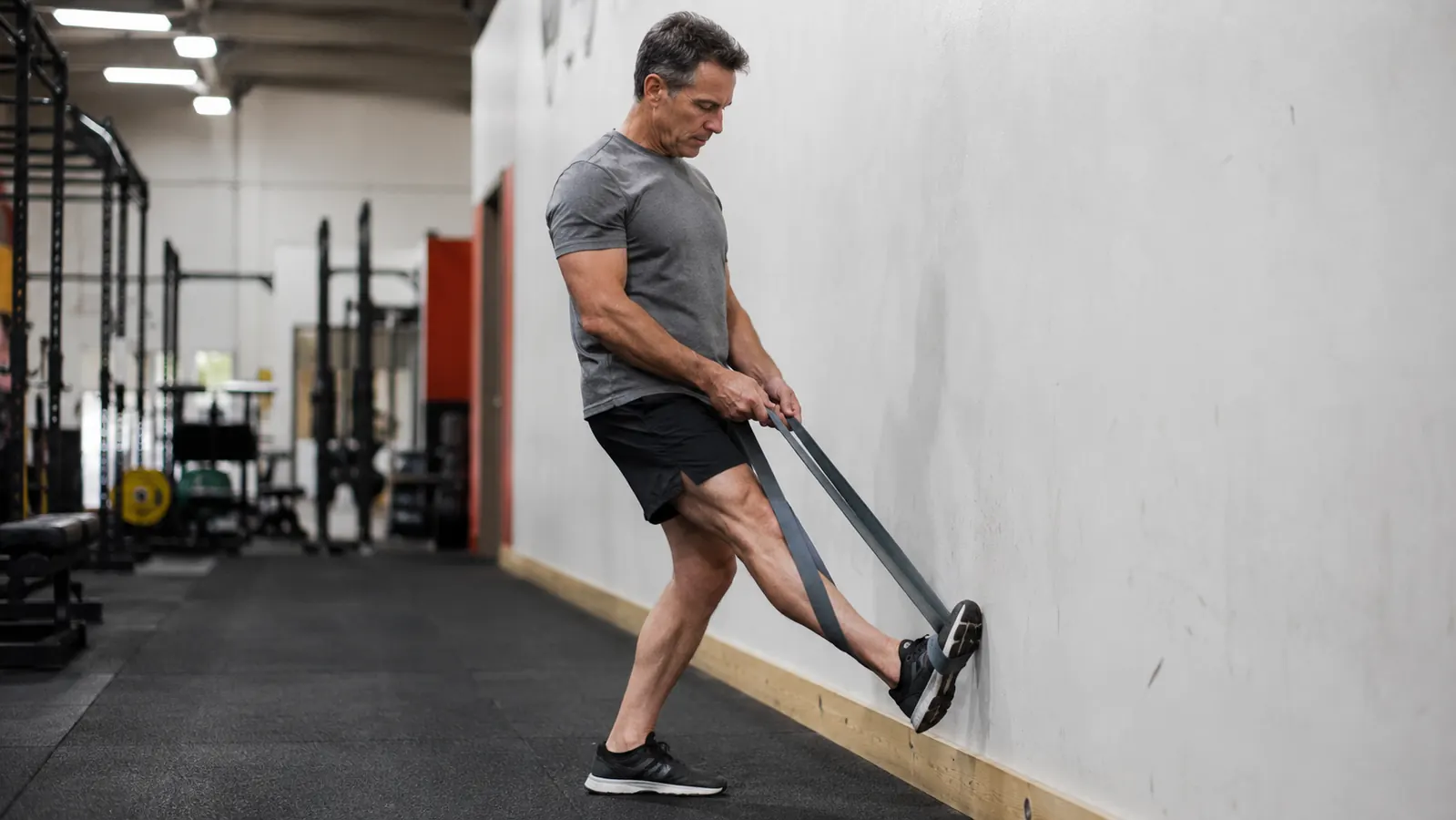
The 6-foot total length accommodates a standing calf stretch where you loop the strap around your forefoot, drop it to floor height, and create a gentle dorsiflexion pull without bending forward at the waist. That specific application is almost impossible with a short yoga strap. I had never seen a review mention it until I tried it myself on my shorter PT's recommendation.
The Exercise Book Is Not Filler
Most products that come with an included booklet: you glance at it, set it on a shelf, and forget about it. The OPTP booklet is different. I was skeptical. It is a small staple-bound pamphlet with black-and-white illustrations. But it was written by Bob Anderson, who wrote "Stretching," a book that has been in continuous print since 1980 and has sold over 3 million copies. The booklet covers 28 stretches with positioning illustrations, suggested hold times, and notes on which muscles are targeted.
What the booklet does that most recovery guides skip: it sequences the stretches. It does not just list 28 things you can do. It walks you through a logical full-body order, starting from the lower body and working up. That sequencing matters more than people realize because starting with a hip flexor stretch before releasing the calves often limits the range you can achieve. Following the book's order for the first two weeks gave me noticeably better results than going freestyle, which I did for the first month before actually reading it.
The strap is the tool. The book is the program. Most people use the tool and skip the program, then wonder why their hamstrings are still tight three months later.
Why the Nylon Fabric Holds Up When Elastic Bands Don't
Resistance bands are popular for assisted stretching, and I get it, they are cheap and multipurpose. But there is a meaningful difference between a resistance band and a non-elastic strap for this application. A resistance band stores energy and springs back. That recoil introduces instability at the end range of a stretch, exactly when your muscles are most relaxed and vulnerable. A non-elastic nylon strap does not do that. It gives you a fixed endpoint. You hold your position at the end of the loop, the strap stays put, and your nervous system is not fighting the recoil.
The nylon weave on this strap is the same type used for seat belt webbing: flat, tight, and dimensionally stable. I have used it through roughly 400 sessions at this point and the strap shows almost no fraying at the loop edges. The stitching at each loop is doubled. The material does not stretch, even under sustained load, which is the whole point. Cheaper alternatives sometimes use cotton or polyester blends that elongate slightly under tension, which defeats the purpose of having a fixed-reference endpoint.
The Things That Actually Surprised Me
First: the foot loop at the far end is sized for a size-13 shoe, which means people with smaller feet (I wear a 9.5) are gripping a loop that is bigger than necessary. It stays functional because the strap is stiff enough to hold its position, but a tighter loop would feel more precise. This is a minor complaint and it has never caused me to lose position, but I noticed it in the first week.
Second: the color coding that some reviewers mention on older versions is gone. Current stock is a single solid color (mine is black). The color coding was meant to make it easier to find your starting loop quickly. Without it, you count loops from the foot end each session. Again, not a dealbreaker, but it is a small ergonomic downgrade that has been noted across several recent buyer reviews.
Third, and most surprising: the strap works well for shoulder mobility, but only for internal/external rotation, not overhead range. If you have shoulder impingement or limited overhead reach, the strap can help with rotation stretches, but it does not replace a wall slide or a doorway stretch for overhead mobility. I had hoped to use it for both. It does rotation well. Overhead reach is a different tool problem.
How It Compares to a Yoga Strap at the Same Price
A standard yoga strap costs roughly the same and serves a similar purpose on paper. The practical difference comes down to two things. First, yoga straps are typically 6 to 8 feet long with one or two D-ring buckle closures, designed primarily for yoga poses where you hold both ends and need to shorten the strap. They work fine for that context. But they do not have the multi-loop ladder system that lets you fine-tune grip position without moving the strap. Second, many yoga straps use cotton fabric, which is softer to the touch but slightly stretchy under load.
If you do yoga and already own a strap, you probably do not need this one too. If you are using a strap specifically for post-workout stretching or PT-prescribed flexibility work, the loop system makes a practical difference. The OPTP strap is designed around the body mechanics of lying-down and seated stretches where fine-tuned tension control matters. The yoga strap is designed around standing poses where you hold both ends and need length adjustment on the fly. Different tools for overlapping but distinct jobs.
What I Liked
- Multi-loop ladder design allows precise grip adjustment without repositioning your body
- Non-elastic nylon fabric holds a fixed endpoint, which is safer at end-range flexibility
- Included exercise book is a sequenced 28-stretch program, not just a product brochure
- Seat-belt-grade webbing shows minimal wear after hundreds of sessions
- Works well for hamstrings, hip flexors, calves, quads, and shoulder rotation stretches
- PT clinics have used this specific product for over 30 years, that track record is real
Where It Falls Short
- Foot loop is sized for large feet, feels less precise for smaller shoe sizes
- Color-coded loop markings have been removed from current versions, making loop-counting slower
- Does not help with overhead shoulder mobility, a different tool is needed for that
- No carry bag included, which matters if you travel with it
- Not a substitute for hands-on manual therapy when soft tissue work is actually needed
Who This Is For
This strap earns its spot in your kit if you have a specific muscle group that stays stubbornly tight despite foam rolling and general stretching. Hamstrings that have been limiting your hip hinge for years. Hip flexors that never fully release after long training blocks. Calves that stay tense no matter how much you stretch them standing. The strap's value is in holding precise tension at the exact end range of a specific muscle, not pulling the whole limb in a general direction. If your problem is specific, the strap's specificity becomes an asset.
Active adults in the 40-60 range tend to get the most out of it, because flexibility declines with age and the fine tension control helps compensate for the decreased sensitivity to passive stretch. Runners, cyclists, and desk workers with chronic hamstring or hip flexor tightness are the primary beneficiaries. If you have been told by a PT that you need to work on a specific range-of-motion deficit, this is the tool they are probably already thinking of.
Who Should Skip It
If your flexibility is already good and you are looking for a recovery tool that delivers some kind of physical sensation (percussion, compression, heat), this strap is not going to give you that. It is a passive stretching aid. Nothing vibrates. Nothing heats up. You supply the effort and the hold time. If you are the type of person who will not hold a stretch for 30 seconds because it feels boring, you will use this twice and put it in a drawer. The strap requires patience and consistency to produce results, which is not a flaw exactly, but it is a mismatch for people who want faster, more active recovery feedback.
Also worth noting: if you have an acute soft tissue injury, a fresh muscle strain, or active joint inflammation, stretching is not what you need right now. This strap is for healthy-tissue flexibility work, not for rehabbing an injury without guidance. The exercise book does not cover injury-specific protocols. Talk to a PT before using it in an acute recovery context.
If a PT recommended you work on hip flexor or hamstring range of motion, this is almost certainly the tool they had in mind.
The OPTP Stretch Out Strap comes with the 28-stretch illustrated exercise book. It is the same strap PT clinics have been using for over 30 years. At the current price, it is the lowest-friction way to start a daily assisted stretching practice.
Amazon Check Today's Price on Amazon -> →